Moist Oven-Baked Cod with Lemon and Cayenne

This moist baked cod is a simple, bright seafood dinner made with lemon juice, olive oil, salt, cayenne pepper, and parsley. The mild fish stays tender and flaky, while lemon adds a clean acidity and cayenne brings a gentle hint of heat. With 5 minutes of prep and a short bake at 400°F (205°C), it is a practical choice for a busy weeknight.
Plan for 10 minutes of cook time and 15 minutes total, while the exact oven time is 10 to 12 minutes depending on the thickness of the fillets. That small distinction matters with cod: the fish is best when it is just cooked through rather than left in the oven until it becomes dry or rubbery.
With over 1,000 reviews and a 4.6-star rating, this recipe has been tried and loved by home cooks around the world.
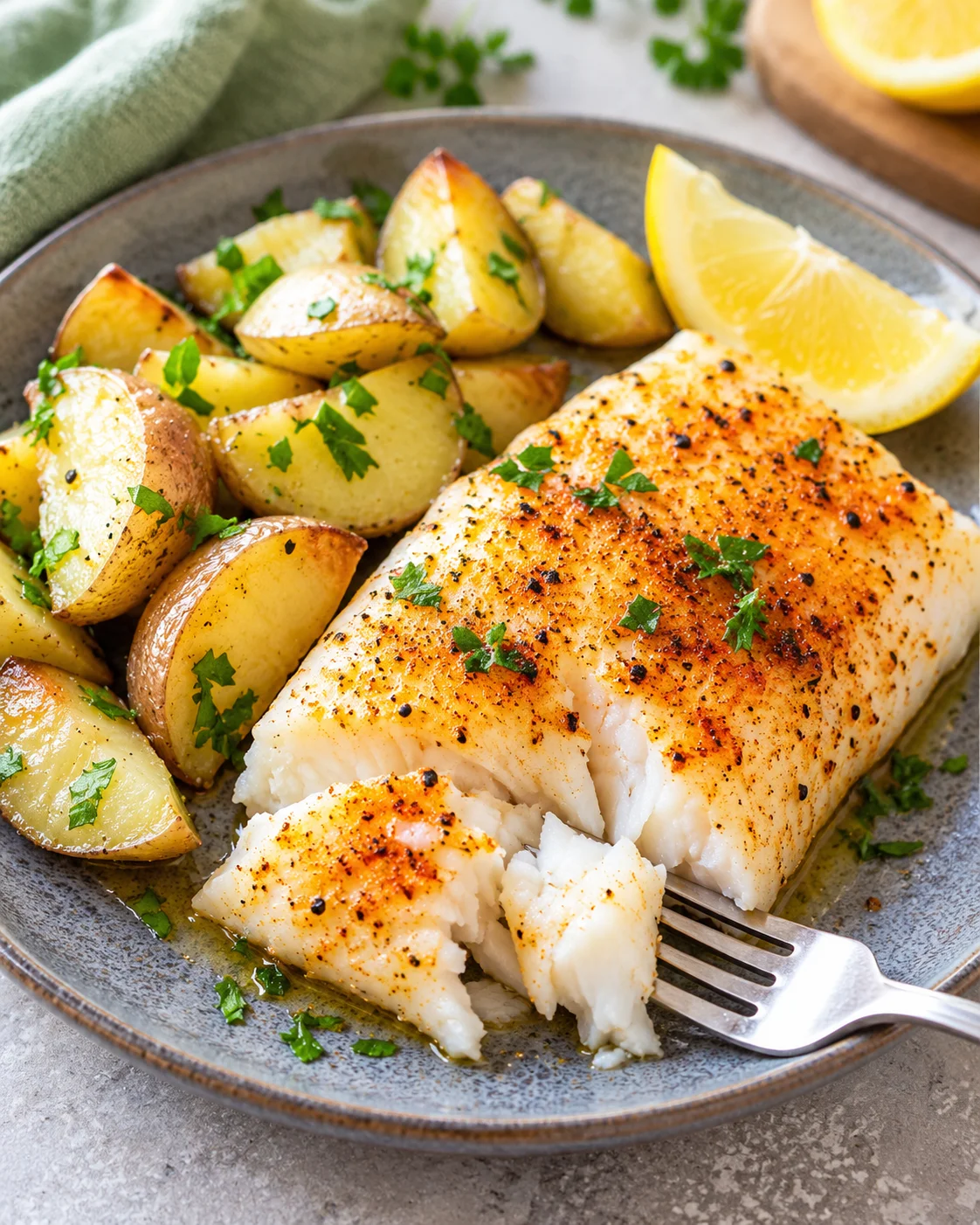
Recipe at a Glance
- Prep time: 5 minutes
- Cook time: 10 minutes; allow 10–12 minutes in the oven based on fillet thickness
- Total time: 15 minutes
- Yield: 2 people
- Method: Oven baked
- Flavor: Moist, tender cod with zesty lemon and a hint of heat
- Difficulty: Very easy, making it suitable for a busy weeknight
- Calories: Approximately 286 per serving
Use the 10–12 minute range as a planning guide, then check the thickest part of the fillets for doneness instead of relying on the timer alone. Fillet thickness determines the cooking time, and a thicker cod loin may need a maximum of 1–2 additional minutes.
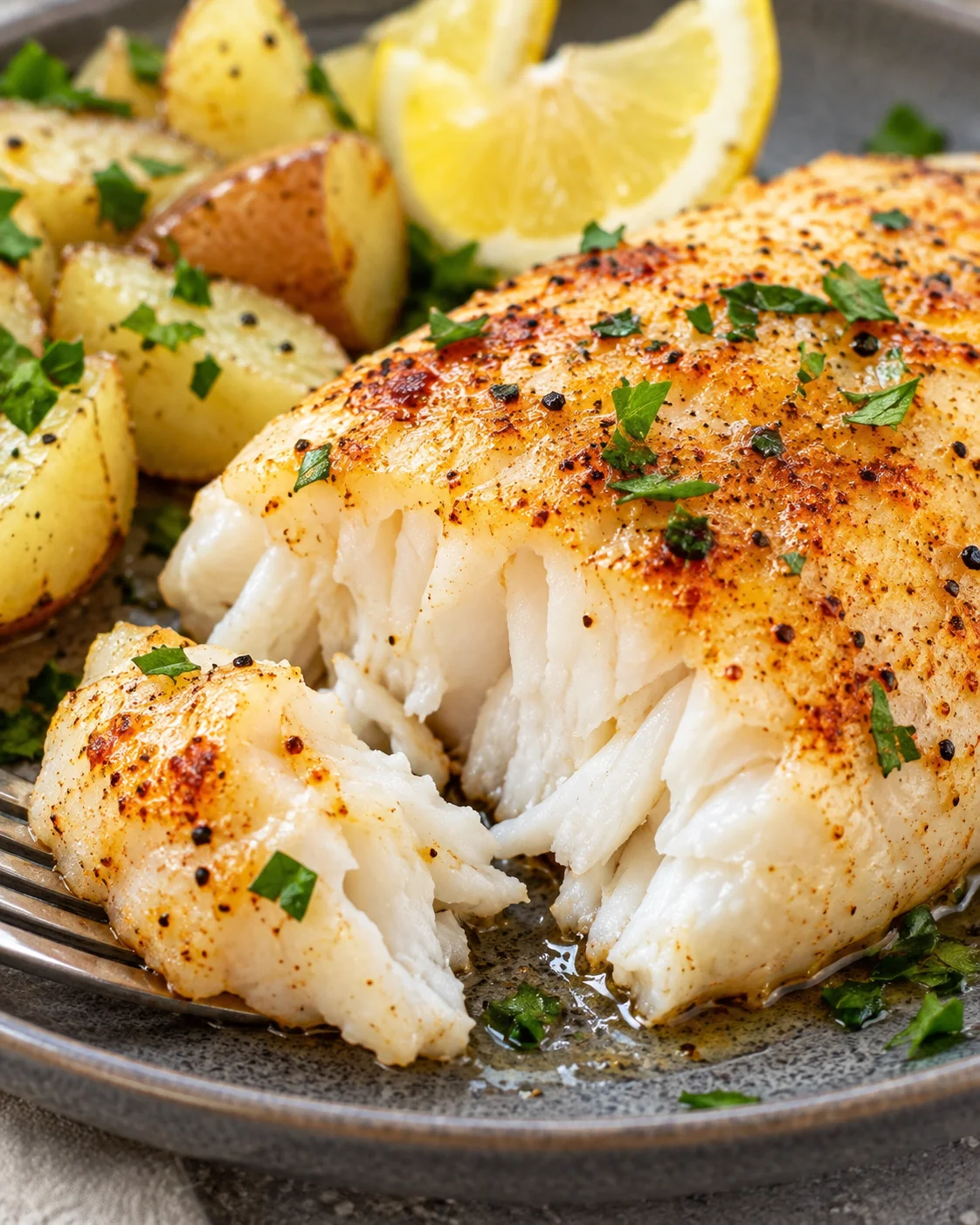
Why You Will Love This Recipe
This oven-baked cod keeps the ingredient list short so the natural flavor of the fish remains the focus. Cod has a mild, delicate taste and a firm but flaky texture, and it does not have the strong fishy flavor some people associate with seafood. Lemon juice brightens the fillets, olive oil helps retain moisture, and a little cayenne gives the dish a pleasing lift without covering up the cod.
- It is quick. Prep takes as little as 5 minutes, and the cod is ready to serve after its brief bake.
- It uses six simple ingredients. Four ingredients create the main flavor profile—cod, olive oil, lemon juice, and cayenne—while salt seasons the fish and parsley finishes it.
- It is easy to adjust. Fresh or fully thawed frozen cod works, skin-on fillets work too, and the recipe offers several different cooking methods and flavor additions.
- It is weeknight-friendly. The method has only two main steps: season the fish, then bake it until opaque and flaky.
Cod is a lean protein source that is low in calories and supplies nutrients including vitamins B12, B6, and B3 (niacin). This dinner is gluten-free and keto-friendly because the listed ingredients are naturally gluten-free and low in carbohydrates.
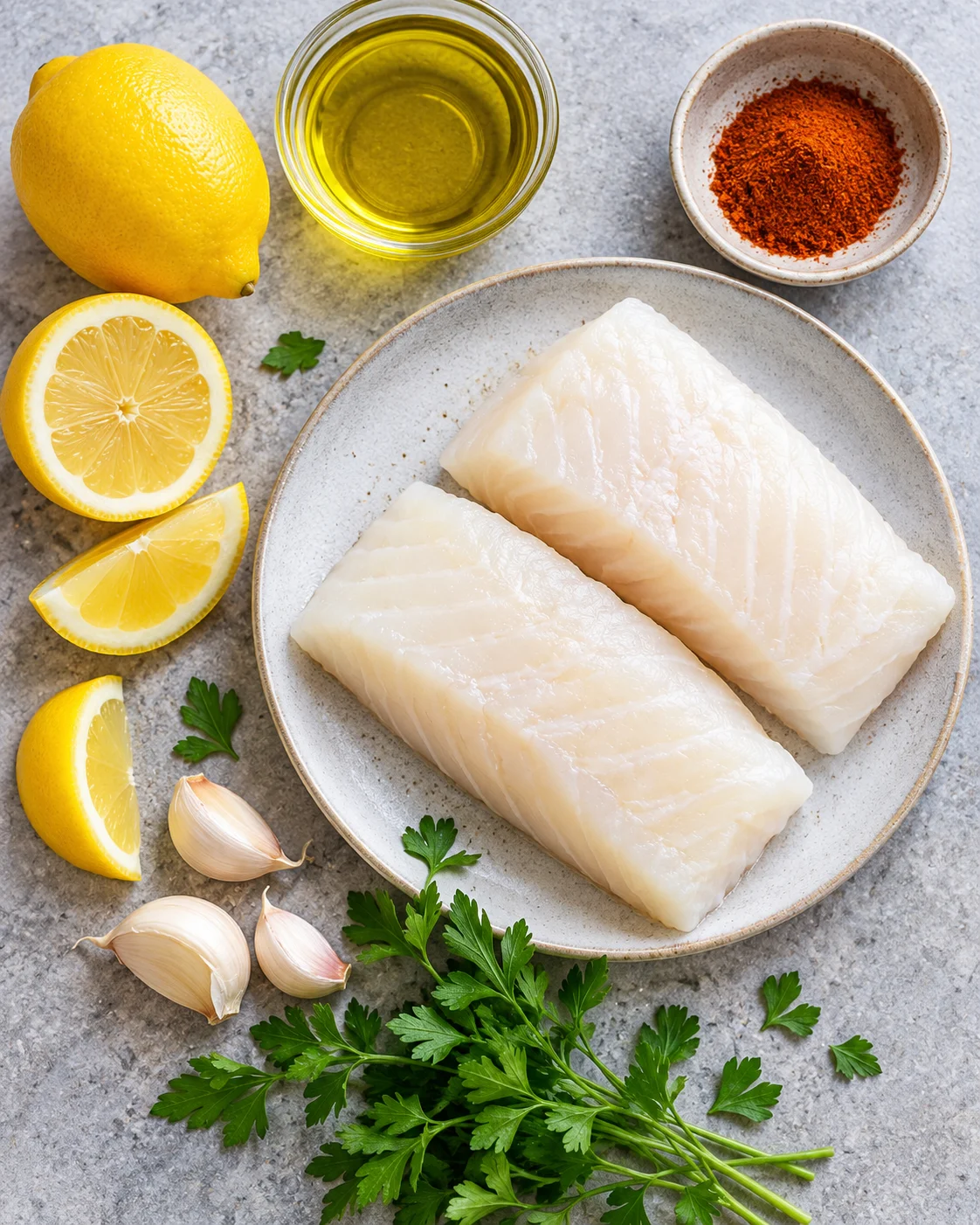
Ingredients
- 1 lb cod fillets or cod loins: Rinse and pat them dry before seasoning. Fresh cod is a good choice for texture and flavor, but frozen cod works after it has been completely thawed. Skin-on cod can be used in the same way.
- 1/4 teaspoon salt: A small amount seasons the fish without overwhelming its mild flavor.
- 1 tablespoon freshly squeezed lemon juice: Lemon adds acidity and brightens the flavor of the cod.
- 3 dashes cayenne pepper: This provides a little heat. Smoked paprika can be used if you do not have cayenne pepper.
- 1 1/2 tablespoons olive oil or extra virgin olive oil: The oil coats the fish, helps it retain moisture, and adds a subtle earthy flavor. Extra virgin olive oil brings a slightly fruity, earthy taste; regular olive oil is also fine.
- 1 tablespoon chopped parsley: Sprinkle it over the baked cod just before serving.
If you are using frozen cod, thaw it in the refrigerator overnight for the best flaky texture. When you need it sooner, keep the fish sealed and submerge it in a bowl of cold water for 30–45 minutes. Do not thaw fish on the counter, where it can become mushy.
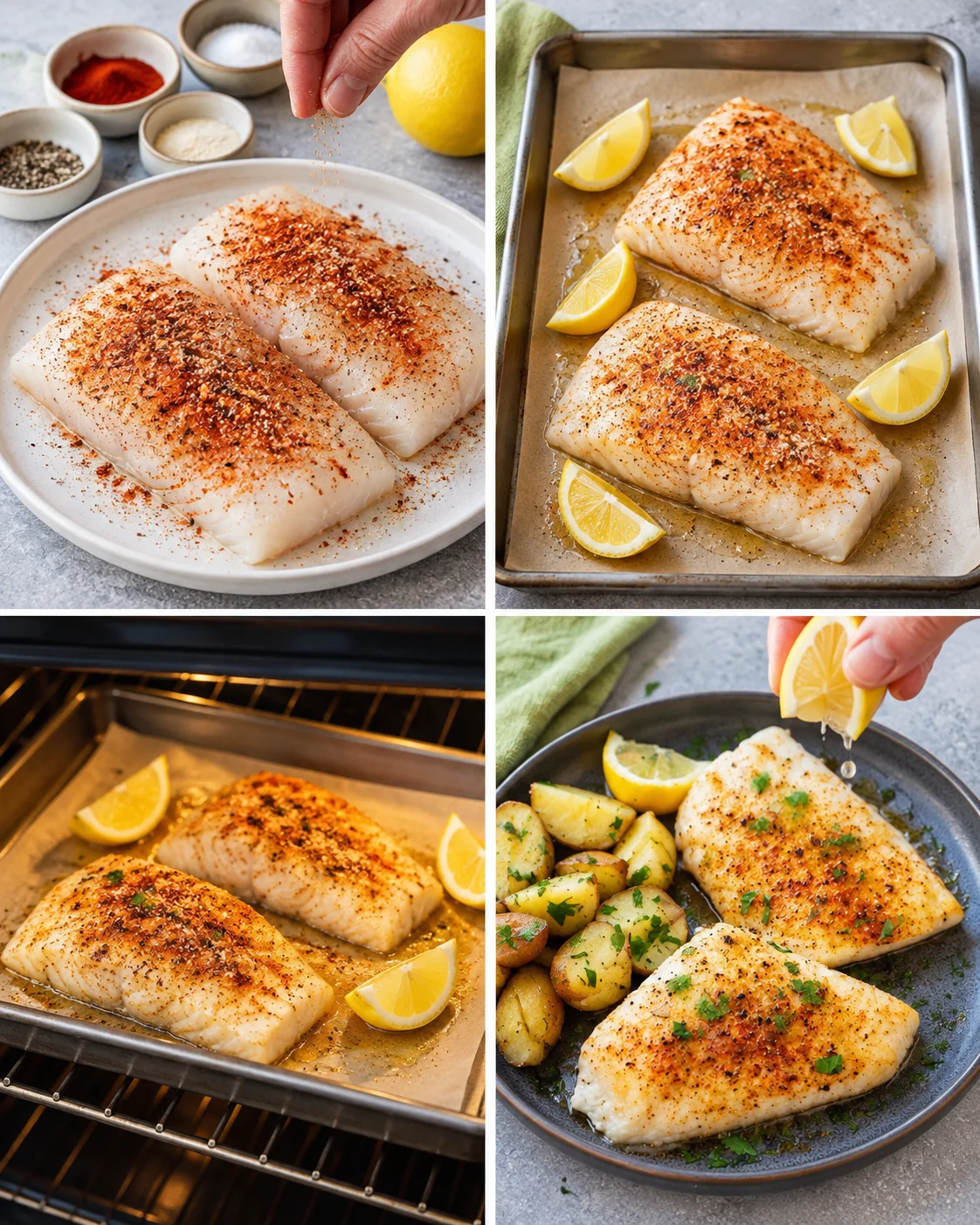
How to Make Baked Cod
- Thaw and dry the fish. If the cod is frozen, thaw it completely. Rinse the fillets if needed, then pat them very dry with paper towels. Removing surface moisture helps prevent cloudy “fish water” from seeping out and keeps the fish from steaming in its own juices.
- Preheat the oven. Heat the oven to 400°F (205°C). A glass baking tray is recommended because it retains heat well and helps the food cook evenly.
- Season the fillets. Arrange the cod in the baking tray. Drizzle the olive oil over the fish, then add the lemon juice, salt, and cayenne pepper. For an especially moist result, you can optionally drizzle and rub both sides with a generous amount of extra virgin olive oil and let the fillets sit for 5 minutes before adding the remaining seasonings. If you do not have extra virgin olive oil, regular olive oil works too.
- Cover and bake. Cover the baking tray with a piece of aluminum foil and bake the cod for 10 to 12 minutes. The exact time depends on the thickness of the fillets; a thicker cod loin may need a maximum of 1–2 additional minutes.
- Check for doneness. The flesh should be opaque white, plump, and fleshy, with a slight shimmer, and it should separate into large, moist flakes when gently tested with a fork. The internal temperature should reach 145°F (63°C). If the flakes still stick together and look jelly-like, give the fish 1 more minute.
- Finish and serve. Sprinkle the cooked cod with the chopped parsley and serve immediately. Avoid overcooking it; fish that breaks apart with a crack or looks dull, flat, and chalky has stayed in the oven too long.
Tips for Moist, Tender Cod
Cod cooks quickly, so small preparation choices make a noticeable difference. Light seasoning works especially well here: lemon cuts through any fishy impression, olive oil adds a subtle nutty note, and cayenne gives the mild fillets a distinct but controlled heat.
- Follow the bone-dry rule. Pat the fillets with paper towels until they are bone dry before seasoning. If the surface is damp, the oven heat turns that moisture into steam. Instead of roasting, the fish steams in its own juices and can develop a soggy bottom.
- Use the albumin warning. Albumin is the white, cloudy protein that can leak from fish as it cooks. A little is normal and means the cod is nearing the finish line. A thick coating can indicate that the heat is too high or the fish has stayed in the oven too long, causing the muscle fibers to squeeze out moisture.
- Watch the edges. When white beads begin to appear around the edges of the thickest part, remove the tray. Even if the center looks slightly translucent at that moment, residual heat will continue cooking the fish as it rests.
- Use the fork twist test. If you do not have a thermometer, gently twist a fork in the thickest part of the fillet. The fish should separate with only a little pressure into large, moist flakes.
- Do not skip the foil if moisture is your priority. Covering the tray helps keep steam inside and protects the cod from drying out. The technique is also useful for other kinds of fish.
- Choose a glass tray when available. A glass baking tray retains heat and helps food cook evenly.
- Do not overbake. Regular fillets generally take 10–12 minutes at 400°F (205°C). A thicker loin should need no more than 1–2 extra minutes. The fish should be opaque and flaky, not rubbery, dry, or cracked.
Before you begin, watch the step-by-step cooking video for a helpful visual guide through the method. The written doneness cues remain important because fillet thickness affects the timing.
When baked cod seems watery, dry, or unevenly cooked, check the surface moisture, fillet thickness, and doneness cues before changing the method. Pat thawed fillets bone dry, cover the tray with foil, begin checking thin pieces at 10 minutes, and give a jelly-like center one more minute. The thickest part should be opaque, reach 145°F (63°C), and separate into moist flakes.
- Why did the cod turn watery?
- Surface moisture may have turned to steam in the oven. Pat the fillets dry until they are bone dry before seasoning, and watch for a soggy bottom or cloudy liquid. Covering the tray helps retain moisture in the fish, but it does not replace drying the surface first.
- Why did the cod turn dry or rubbery?
- It may have stayed in the oven too long. Start checking at the shorter end of the 10–12 minute range, especially for thin fillets. A thick coating of albumin, a dull chalky center, cracks, or a fish that breaks apart with a crack are signs of overcooking.
- Why is the center still jelly-like?
- Give the fish 1 more minute, then check the thickest part again. It should become opaque white and separate into large, moist flakes with gentle pressure. A thermometer should read 145°F (63°C).
- Why did one piece finish before another?
- Fillet thickness controls the cooking time. A regular fillet generally needs 10–12 minutes, while a thicker cod loin can need a maximum of 1–2 additional minutes. Check the thickest part for opaque, flaky doneness before serving.
- Can I use the fish straight from the freezer?
- No. Thaw frozen cod completely first. Baking it while still frozen can leave the texture dry, tough, and rubbery. Thaw it overnight in the refrigerator or use the sealed cold-water method for 30–45 minutes.
Variations and Substitutions
Baking is one of the easiest ways to cook cod, and other supported preparations include shallow poaching, pan-frying, steaming, and stir-frying. Treat these as alternate preparations rather than changes to the baked-cod method.
- Shallow poaching: Season the fish as directed, begin on the stovetop, and finish it in the oven. This one-pan method combines moist and dry heat and is described as a standard restaurant technique.
- Pan-frying: Cook the cod in melted unsalted butter, making sure both sides cook evenly. Finish it with a favorite sauce such as lemon-butter or tomato-basil.
- Steaming: Use a traditional Chinese steaming method in a steamer. The light flavor of cod remains prominent; finish with a splash of soy sauce and chopped scallions.
- Stir-frying: Cod can stand in for basa in a ginger-scallion fish preparation.
- Japanese-inspired flavor: Miso black cod is another cod preparation to try when you want a Japanese twist.
Mediterranean Add-Ins
For a Mediterranean direction, add any of the following to the cod:
- Capers add a small, tangy burst of acidity.
- Fresh minced garlic brings aromatic depth.
- Sliced Kalamata olives contribute briny flavor.
- Cherry tomatoes add sweetness, juiciness, and color.
Olive oil can also be replaced with avocado oil, coconut oil, or ghee (clarified butter).
Can You Bake Cod with Tomatoes?
Yes. Layer cod fillets with cherry tomatoes or sliced tomatoes, add seasonings and melted butter, and bake at 400°F (205°C) for 10 minutes. Check the thickest part for the same opaque, flaky doneness before serving.
Fresh or Frozen Cod?
Both fresh and frozen cod work for this recipe. In the United States, most cod is frozen shortly after it is caught. Fresh Atlantic cod straight from the ocean may be available at fish markets near the coast or at specialty seafood stores, but it is not accessible to everyone. If you live in New England or another coastal area, ask local fishmongers whether fresh, never-frozen fish is available.
One shopping example is Frozen Kirkland Signature Atlantic Wild Caught Cod Loins sold in a 2-pound bag at Costco. Costco operates major supermarkets in the United States and the United Kingdom. Keep in mind that sablefish, which is commonly marketed as black cod or Alaska cod, is not actually a member of the cod family.
If you are planning the meal around frozen fish, move the cod to the refrigerator the night before. That slow thaw keeps the preparation simple the next day and gives you time to pat the fillets dry before the oven is heated.
Storage, Freezing, and Reheating
Let leftover cod cool before storing it in an airtight container in the refrigerator. It will keep for up to 3 days. For longer storage, cool the fish completely, wrap it tightly in plastic wrap or foil, and place it in a freezer-safe bag or container. Thaw the frozen cod before reheating.
To reheat without drying it out, warm the fish in a 350°F (175°C) oven or air fryer for 6–8 minutes, or until heated through. Loosely cover it with foil to help keep it juicy. You can also microwave it with a splash of water and a damp paper towel over the top.
Serving Suggestions
Serve the lemon cod fillets as soon as they are garnished with parsley. Boiled potatoes make a simple side, while roasted vegetables add color and texture. Roasted tomatoes and zucchini with Parmesan are especially fitting vegetable pairings. A fresh salad keeps the meal light and lets the lemony fish remain the focus.
With its quick prep and short cooking time, this baked cod works well as a complete weeknight dinner. The fish is also mild enough to pair with sauces and sides that bring a different flavor direction, from briny Mediterranean additions to the butter-based and tomato-basil options listed above.
Frequently Asked Questions
Does cod have a strong fishy flavor?
Cod has a very mild flavor. Its flesh is thick and light in color, and it has lower oil content than many other fish, so it does not have a strong fishy taste.
Can I make this recipe without olive oil?
Yes. Use avocado oil, coconut oil, or ghee (clarified butter) instead. If you simply do not have extra virgin olive oil, regular olive oil also works; use a little more if needed to coat the fillets.
Is baked cod healthy?
Cod is very low in fat and high in lean protein. It contains vitamins and minerals including B12, B6, and B3 (niacin), and it contains low levels of mercury compared with other types of fish. This recipe provides approximately 286 calories per serving.
What is the ideal baking temperature for cod?
Bake cod at 400°F (205°C) for about 10–12 minutes. The exact time varies with the thickness of the fillets. A higher temperature for a shorter cooking time helps preserve the fish’s tender, moist texture, but use the doneness cues and an internal temperature of 145°F (63°C) rather than relying on the clock alone.
How do I cook cod so it is not dry?
The extra-virgin-olive-oil rub and 5-minute rest are optional. If you are in a rush, drizzle the oil generously over the fish instead. If you do not have extra virgin olive oil, regular olive oil works too. Cover the baking tray with foil to keep steam inside, and add lemon juice or white wine for additional moisture and flavor. Most importantly, remove the cod as soon as it is opaque and flakes easily.
How do I know when baked cod is done?
The flesh should be opaque and easy to flake with a fork, and the internal temperature should reach 145°F (63°C). The thickest part should separate into moist flakes without looking jelly-like. Do not overcook or overbake the fillets.
Can I bake cod in foil?
Absolutely. Season the cod with the spices and herbs, drizzle it with olive oil, and wrap it securely in foil before baking. Foil helps lock in moisture and flavor. In the tray method, covering the baking tray with aluminum foil provides the same moisture-focused approach.
What can I use instead of cod?
Haddock, pollock, and flounder are suggested substitutes. They are similar in texture and flavor and are often used as alternatives in recipes.
How long does baked cod keep in the refrigerator?
Leftovers keep in an airtight container in the refrigerator for up to 3 days. Let the fish cool before storing it.
Can I freeze baked cod?
Yes. Let it cool completely, wrap it tightly in plastic wrap or foil, and store it in a freezer-safe bag or container. Thaw it before reheating.
How do I reheat baked cod without drying it out?
Reheat it in a 350°F (175°C) oven or air fryer for 6–8 minutes, until warmed through. Loosely cover it with foil. In a microwave, add a splash of water and cover the fish with a damp paper towel.
How many calories are in a serving?
One serving provides approximately 286 calories, 1 g carbohydrates, 41 g protein, 12 g fat, 2 g saturated fat, 2 g polyunsaturated fat, 8 g monounsaturated fat, 98 mg cholesterol, 415 mg sodium, 986 mg potassium, 1 g fiber, 0.4 g sugar, 884 IU vitamin A, 9 mg vitamin C, 42 mg calcium, and 1 mg iron.
Nutrition Information
Per serving: 286 calories, 1 g carbohydrates, 41 g protein, 12 g fat, 2 g saturated fat, 2 g polyunsaturated fat, 8 g monounsaturated fat, 98 mg cholesterol, 415 mg sodium, 986 mg potassium, 1 g fiber, 0.4 g sugar, 884 IU vitamin A, 9 mg vitamin C, 42 mg calcium, and 1 mg iron.