Tuna Noodle Casserole Recipe

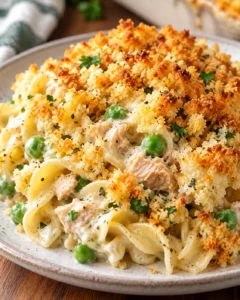
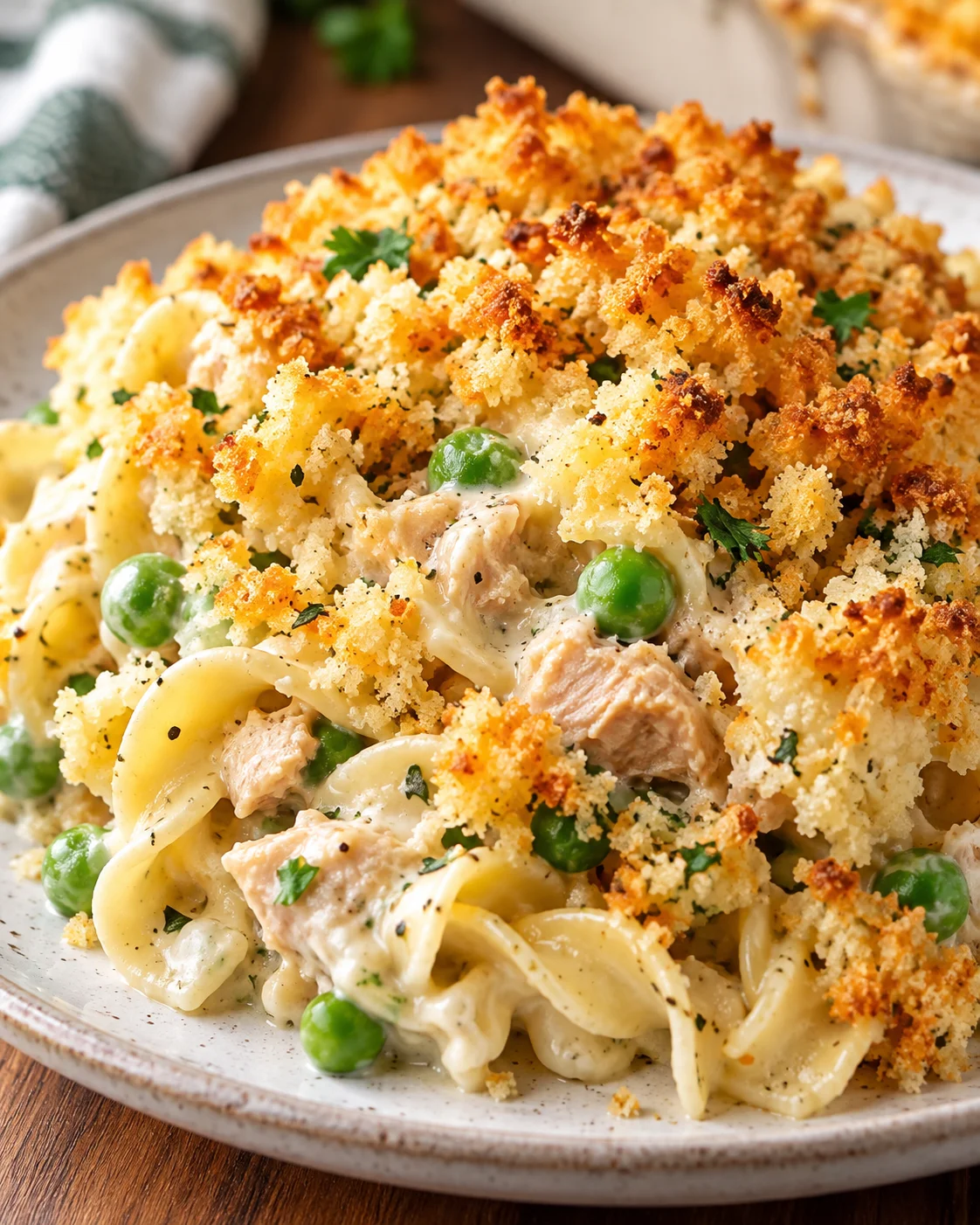
This tuna noodle casserole recipe is a classic comfort-food dinner made with flaky tuna, tender egg noodles, peas, celery, and a creamy, cheesy mushroom sauce. A buttery crumb topping turns golden as the casserole bakes until hot and bubbly, giving every serving a soft center and a crisp finish.
With 15 minutes of prep and a short bake, this casserole is a practical choice for a weeknight dinner, a work potluck, or a neighborhood gathering. It serves six, can be assembled ahead of time, and is flexible enough to welcome leftover vegetables. Serve it with a simple side salad or homemade buttermilk biscuits for a complete meal.
Why You Will Love This Recipe
Tuna noodle casserole has earned its place among family-favorite comfort foods for good reason. It is affordable, straightforward to assemble, and made from familiar ingredients. The egg noodles carry the creamy sauce, while tuna adds a flaky, savory center and peas and celery bring color and texture to the dish.
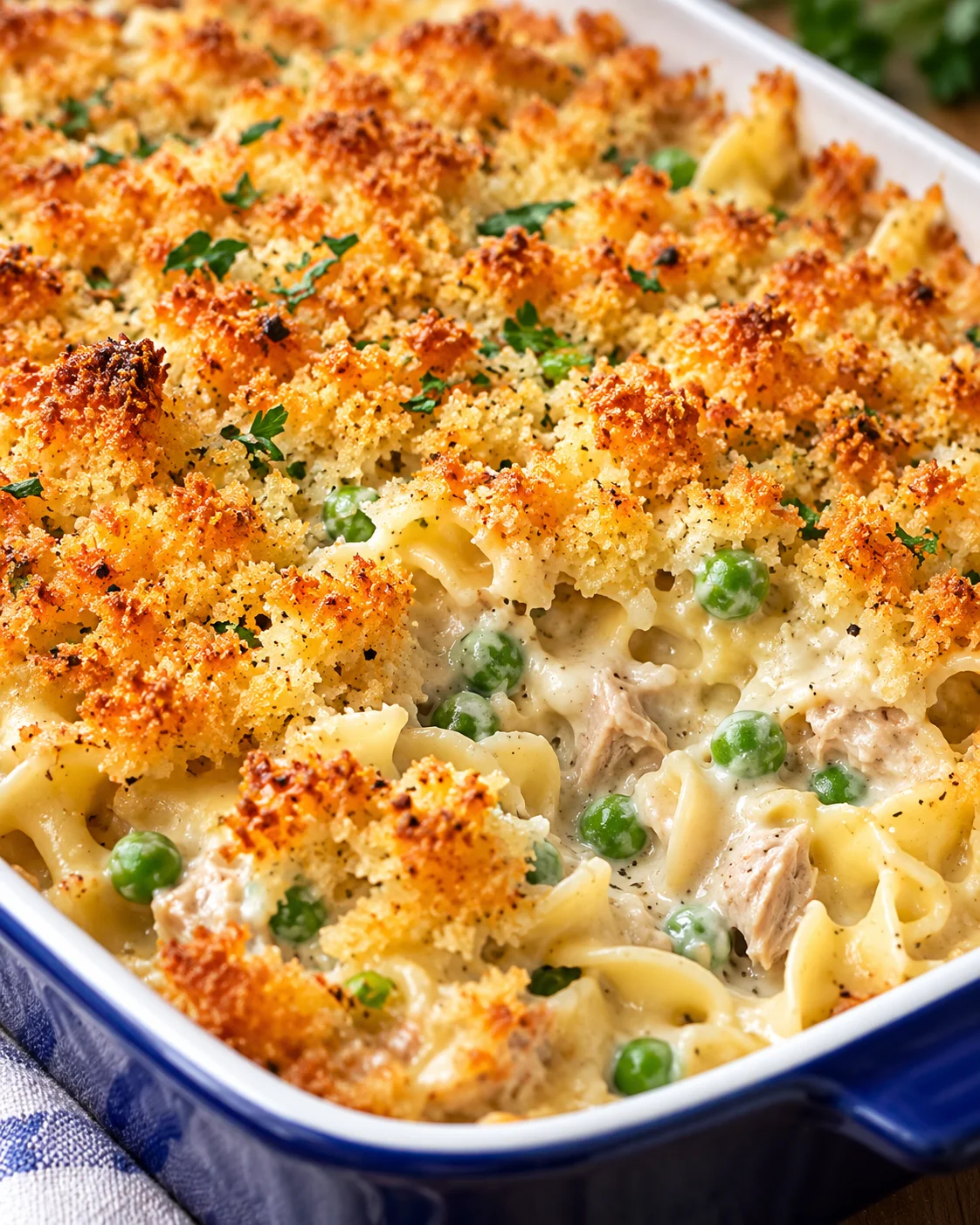
The oven does the finishing work. While the noodles cook, you can prepare the vegetables, stir together the sauce, and mix the casserole. Once it is in the baking dish, a sprinkle of panko, cheddar, butter, and parsley creates a crumb topping that becomes golden and bubbly with the filling underneath.
This is also a useful recipe when you have vegetables waiting in the refrigerator. The classic combination uses onion, celery, and peas, but it also works with leftover green beans, roasted carrots, or steamed broccoli. For another format, swap the noodles for rice to make a tuna rice casserole.
Ingredients
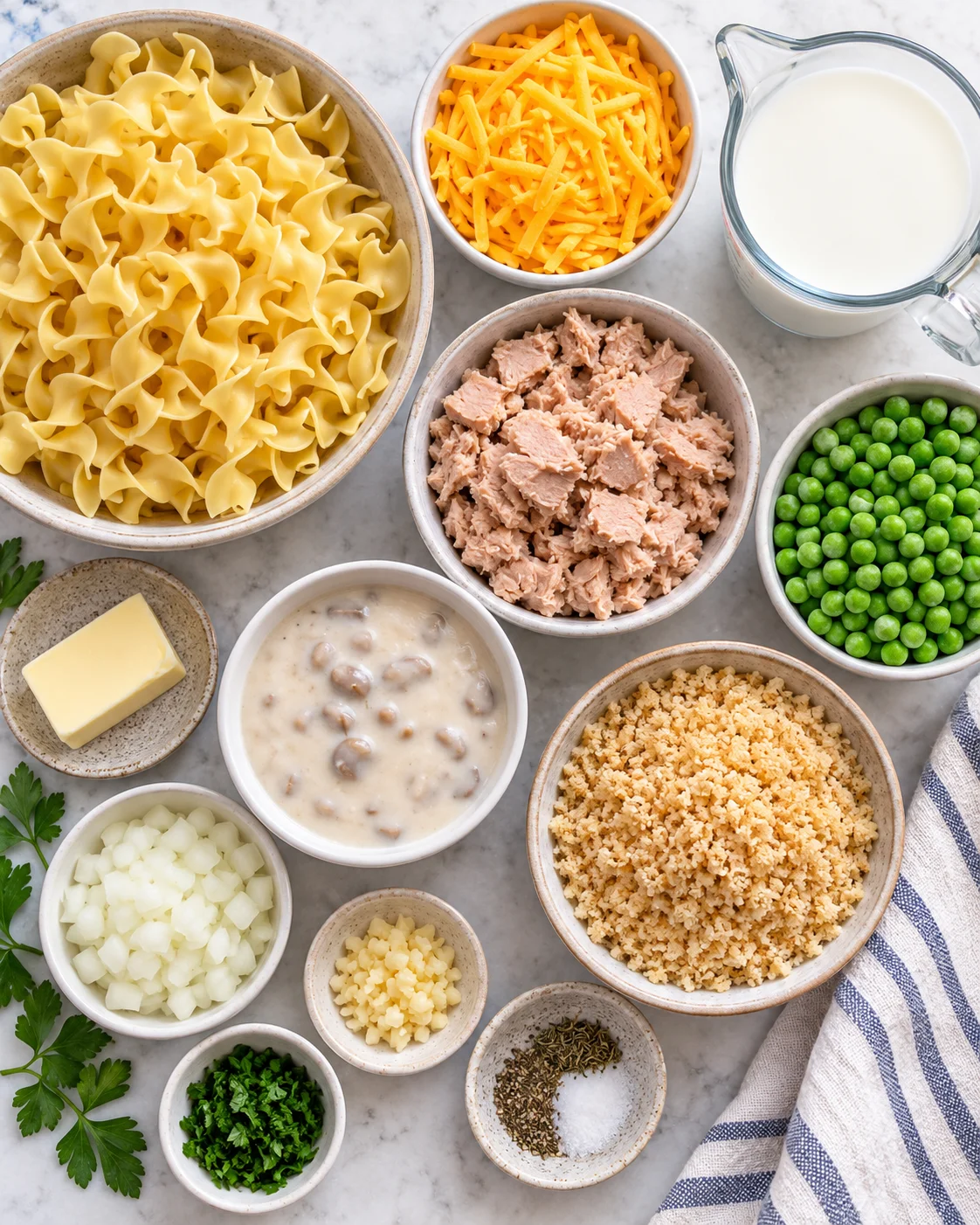
Use a 2-quart baking dish. The recipe makes 6 servings, with 15 minutes of prep time, 18 minutes of cook time, and 33 minutes total time. The ingredient list below keeps the creamy casserole separate from its crumb topping so each component is easy to prepare.
For the casserole
- 3 cups egg noodles, measured dry (about 6 ounces). One cup of dry egg noodles weighs about 2 ounces.
- 1 tablespoon butter, for cooking the vegetables.
- 1 small onion, diced.
- 2 ribs celery, diced.
- ⅔ cup frozen peas, thawed.
- 1 (5-ounce) can tuna, drained.
- 1 (10.5-ounce) can condensed cream of mushroom soup.
- ⅓ cup milk.
- 1 cup shredded cheddar cheese.
- 1 tablespoon chopped fresh parsley or 1 teaspoon dried parsley.
For the crumb topping
- ½ cup panko bread crumbs.
- 1 tablespoon melted butter.
- ½ cup shredded cheddar cheese.
- 1 tablespoon chopped fresh parsley or 1 teaspoon dried parsley.
Cooking the noodles only to al dente is important because they continue cooking in the oven. Draining and rinsing them under cold water stops the cooking before they are mixed with the sauce.
How to Make Tuna Noodle Casserole
Prepare the topping first, then cook the noodles and vegetables while the oven heats. The casserole comes together in one large bowl before it is spread into the baking dish.
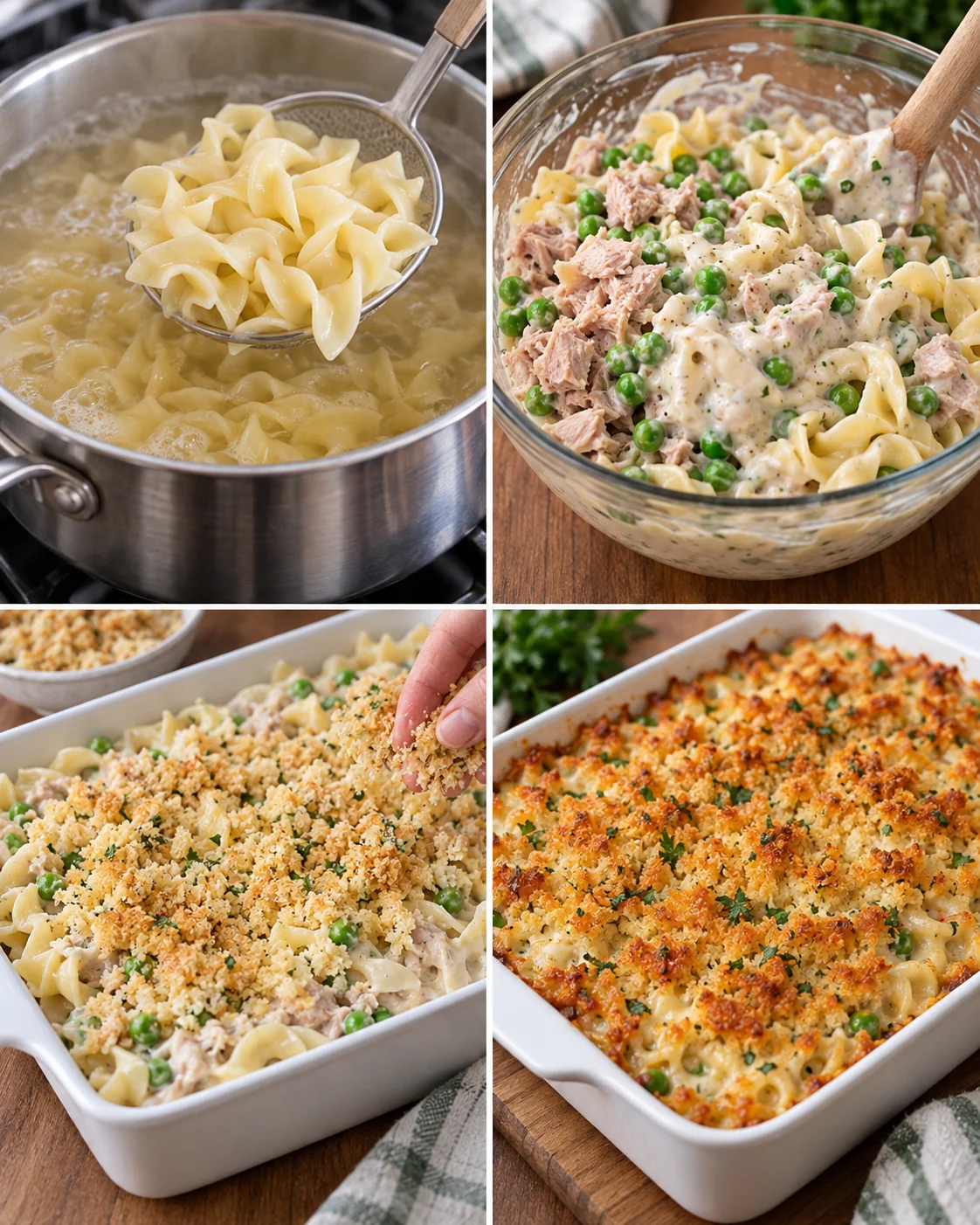
- Heat the oven and prepare the topping. Preheat the oven to 425°F. Combine the panko bread crumbs, melted butter, cheddar cheese, and parsley for the topping, then set it aside.
- Cook the noodles. Boil the egg noodles according to the package directions, cooking them to al dente. Drain them and rinse them under cold water so they do not become overly soft while the casserole bakes.
- Soften the vegetables. Melt 1 tablespoon butter and cook the diced onion and celery until tender, about 5 to 7 minutes.
- Mix the filling. In a large bowl, combine the cooked noodles, onion and celery mixture, thawed peas, condensed cream of mushroom soup, milk, 1 cup shredded cheddar cheese, drained tuna, and parsley. Mix well so the sauce and vegetables are distributed through the noodles.
- Fill the dish. Spread the mixture into a 2-quart casserole dish. Sprinkle the prepared crumb topping evenly over the top.
- Bake until bubbly. Bake for 18 to 20 minutes, or until the casserole is bubbly and the crumb topping is golden. The recipe card lists an 18-minute cook time; begin checking at that point for the stated doneness cue.
Let the casserole finish baking until the center is hot and the sauce is bubbling around the noodles. The topping is meant to provide a buttery, cheesy contrast to the creamy filling, so distribute it across the whole surface before the dish goes into the oven.
Tips for Success
Keep the noodles al dente
The noodles continue to cook during the bake. Cooking them only to al dente, then draining and rinsing them under cold water, helps avoid a mushy texture in the finished casserole. Follow the package directions for the boiling step rather than extending the time in the pot.
Prepare the components in parallel
The casserole is designed for a quick assembly. While the oven preheats, mix the crumb topping. While the noodles boil, cook the onion and celery in butter. Once both are ready, the remaining ingredients can be combined in the large bowl and transferred to the baking dish.
Use the doneness cues
Look for a bubbly casserole and a golden crumb topping rather than relying on a shortened bake. Use the 18- to 20-minute baking window and the bubbling doneness cue. If you assemble it ahead, use the make-ahead and thawing guidance below instead of putting a frozen dish directly into the oven.
Keep the topping balanced
The topping has its own measured combination of panko, melted butter, cheddar, and parsley. Mix those ingredients before sprinkling them over the casserole so the butter and cheese are spread through the crumbs instead of concentrated in one place.
Variations and Substitutions
The basic formula is intentionally flexible while keeping the creamy mushroom sauce, tuna, noodles, and crumb topping at the center. You can use any kind of pasta instead of egg noodles. If you make that change, still cook the pasta to al dente so it can finish in the oven without becoming mushy.
For the vegetables, onion, celery, and peas are the simple combination in this recipe. You can also use leftover green beans, roasted carrots, or steamed broccoli. These options are useful when you want to add what is already available, but make sure the vegetables are ready to eat before they are mixed into the casserole because the oven step is a short finishing bake.
Rice can replace the noodles for a different format: use the idea as a tuna rice casserole. This is a format change rather than a new set of quantities, so keep the sauce and other ingredients coherent when making it. The recipe also gives a choice between fresh parsley and dried parsley in both the casserole and the topping: use 1 tablespoon chopped fresh parsley or 1 teaspoon dried parsley in each place.
Because the dish is affordable, tasty, and versatile, it works well for using suitable leftovers. Keep additions modest enough that the creamy sauce can still coat the noodles or rice and the mixture can fit in the 2-quart dish.
Storage, Make-Ahead, and Freezing
Make it ahead
This tuna casserole can be prepared ahead of time and baked later. Assemble the casserole in the baking dish, including the crumb topping, then hold it for the later bake according to your meal plan. When it is ready to cook, use the same 425°F oven and bake until it is bubbly.
Freeze before baking
You can freeze the casserole before it is cooked. A useful freezer method is to assemble it in a foil-lined pan, then wrap and seal it fully before freezing. This lets you save the casserole dish for another use. Before baking a frozen casserole, thaw it completely in the refrigerator overnight. Thawing matters because a frozen dish can otherwise cook unevenly, leaving some areas overcooked while others remain undercooked, especially when the casserole began frozen and unbaked.
After it has thawed safely in the refrigerator, bake the casserole until it reaches 165°F. This is the endpoint for a thawed frozen casserole.
Freeze after baking
A fully baked casserole can also be frozen. Let it cool completely before wrapping it and placing it in the freezer. Whether you freeze it before or after cooking, wrap and seal it properly. Properly wrapped and sealed casseroles can be frozen for up to 6 months without damaging flavor or texture.
Serving Suggestions
Serve the casserole warm, when the creamy mushroom sauce is bubbling and the crumb topping is golden. A simple side salad balances the rich, saucy noodles and keeps the meal easy. Homemade buttermilk biscuits are another practical pairing, especially when you want a more substantial comfort-food dinner.
Because the recipe makes six servings and can be assembled ahead, it fits a weeknight table as well as a work potluck or neighborhood event. It can go from preparation to presentation without a complicated final step: bake it in the 2-quart dish, let the bubbling filling and crisp topping speak for themselves, and portion the casserole as needed.
Frequently Asked Questions
Can I use pasta other than egg noodles?
Yes. You can use any kind of pasta. Cook the replacement pasta to al dente, drain it, and rinse it under cold water before mixing it into the casserole so it has room to finish cooking in the oven.
Why should the noodles be al dente?
The noodles continue cooking during the bake. Starting with al dente noodles helps avoid a mushy texture after the casserole spends 18 to 20 minutes in the oven.
Can I use other vegetables?
Yes. Along with the onion, celery, and peas in the ingredient list, use leftover green beans, roasted carrots, or steamed broccoli. Add vegetables that are already prepared and keep the mixture balanced so it remains coated in the creamy sauce.
Can I assemble tuna noodle casserole ahead of time?
Yes. Assemble it now and bake it later. If it has been frozen, thaw it fully overnight in the refrigerator before baking; do not put a frozen casserole straight into the oven.
How long can I freeze the casserole?
Properly wrapped and sealed casseroles can be frozen for up to 6 months without damaging flavor or texture. For a fully baked casserole, cool it completely before wrapping. For an unbaked casserole, use a foil-lined pan, wrap and seal it fully, then thaw it overnight in the refrigerator before baking.
What temperature should a thawed frozen casserole reach?
After thawing overnight in the refrigerator, bake the casserole until it reaches 165°F. For a freshly assembled casserole, bake at 425°F until bubbly, following the 18- to 20-minute method.
Nutrition Information
The following estimate is for one serving. Nutrition information will vary based on cooking methods and brands of ingredients used.
- Serving
- 1.25 cup
- Calories
- 323
- Carbohydrates
- 25 g
- Protein
- 19 g
- Fat
- 15 g
- Saturated Fat
- 9 g
- Cholesterol
- 68 mg
- Sodium
- 689 mg
- Potassium
- 317 mg
- Fiber
- 2 g
- Sugar
- 3 g
- Vitamin A
- 750 IU
- Vitamin C
- 10 mg
- Calcium
- 256 mg
- Iron
- 2 mg