Easy Baked Salmon Recipe in the Oven

If you are looking for a baked salmon easy recipe, start here. This classic oven method seasons salmon filets simply, bakes them hot, and finishes them with lemon. From start to finish, the recipe takes about 15 minutes, and the seasonings are easy to change to suit the rest of your meal.
This recipe brings the baked-protein conversation from chicken, steak, pork, and shrimp to fish, with salmon as the star. Salmon is delicious, affordable, easy to find, and valued for its protein, omega-3s, and other nutrients. It also works with an especially wide range of seasonings, marinades, and finishing sauces. If you have enjoyed foil-wrapped honey mustard salmon or garlic-lovers salmon, this filets-on-a-pan approach is the back-to-basics version.
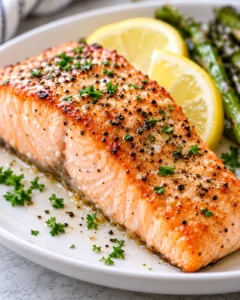
The oven is a practical way to prepare salmon because the method is straightforward and the doneness cues are clear. Keep the skin on while the filets cook to help protect the fish from drying out. The result should be crispy on the outside, moist and tender inside, and flaky when tested. Serve it plain with lemon, or add fresh herbs and a favorite sauce at the table.
Prep time: 5 minutes
Cook time: 10 minutes
Total time: 15 minutes
Makes: 4 servings
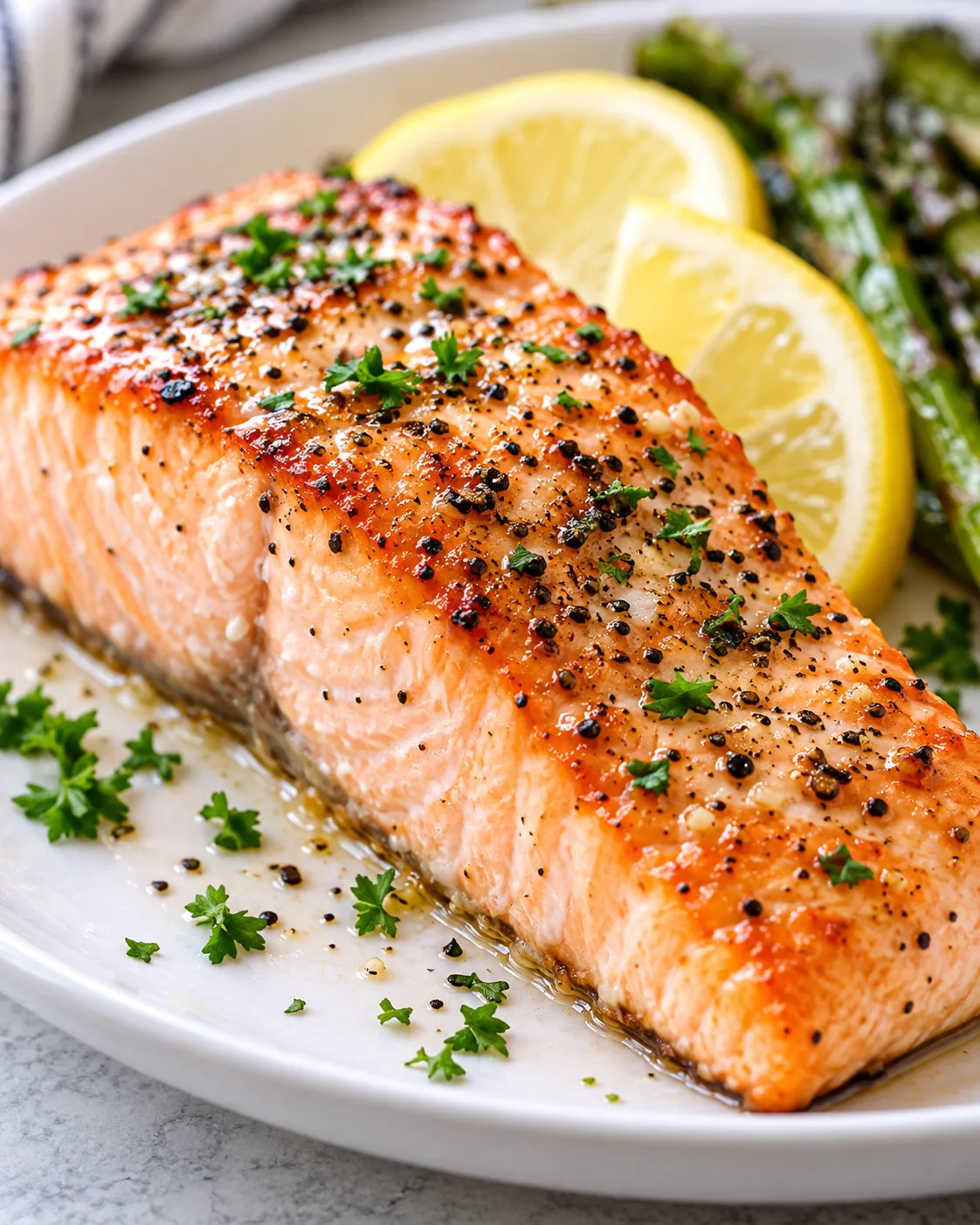
Why You Will Love This Recipe
This baked salmon recipe keeps the main course simple without making it feel plain. A hot 450°F oven does the cooking, and high-heat oil, garlic powder, salt, and black pepper make a dependable classic blend. The base is neutral enough for other dry seasonings, a short marinade, or a finishing sauce.
- It is quick. The complete recipe is designed for about 15 minutes, including 5 minutes of prep and 10 minutes of cook time. The exact bake depends on filet thickness, so the temperature and texture checks matter more than the clock alone.
- It is flexible. Use avocado oil, canola oil, or another preferred high-heat cooking oil. Keep the seasoning simple, add other dry seasonings, or finish the cooked fish with herbs, lemon, or sauce.
- It stays tender when handled thoughtfully. Letting the filets rest for 15-30 minutes helps them cook more evenly, and leaving the skin on helps prevent the salmon from drying out.
- It is easy to check. An instant-read thermometer gives you a precise internal temperature, while a fork or knife provides a useful visual and texture check. The salmon should be opaque and flake easily.
- It fits almost any plate. Lemon keeps the flavors bright, and the salmon pairs with salads, potatoes, roasted vegetables, or fruit salad.
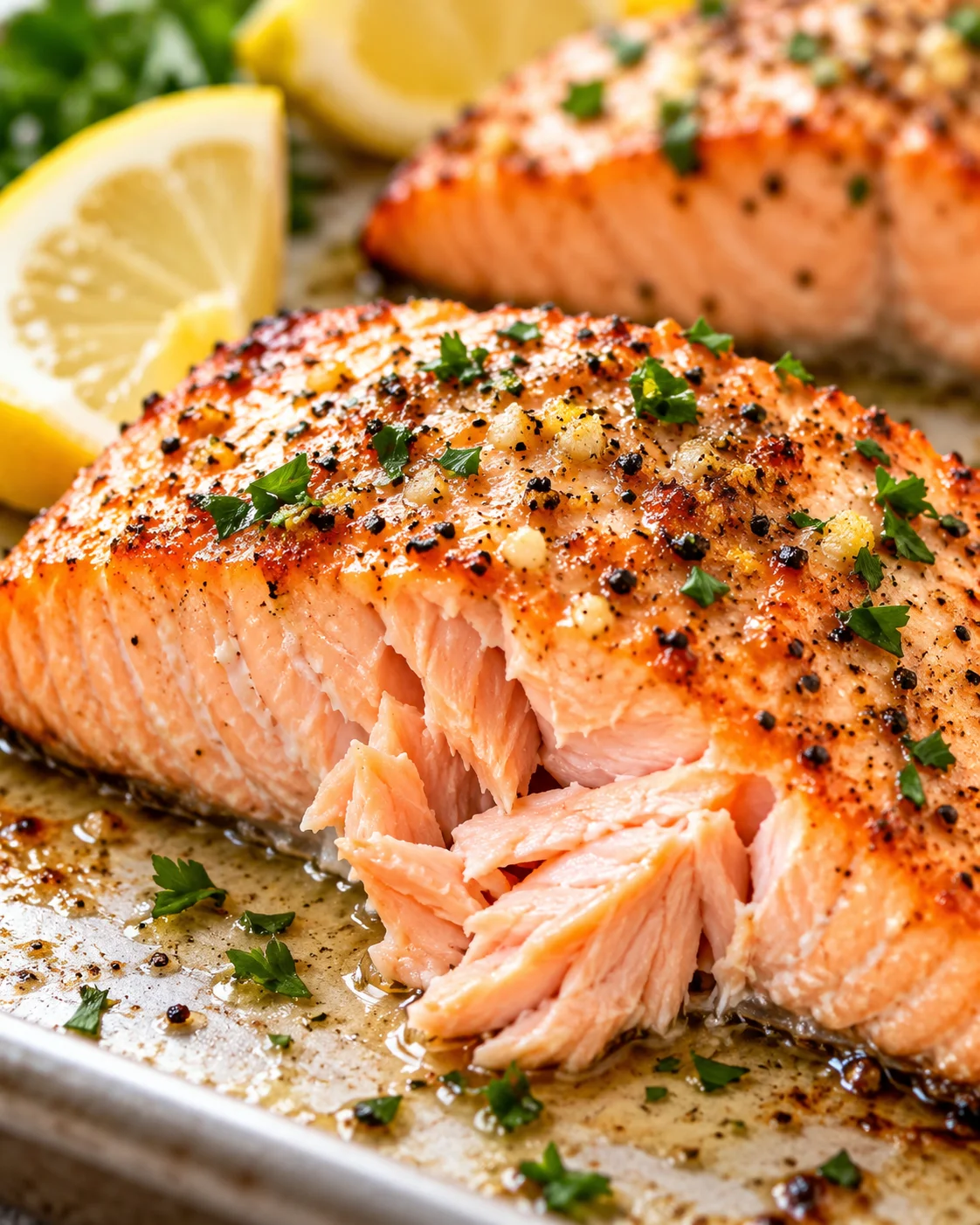
Ingredients
For the salmon
- 4 salmon filets, skin-on (about 6-8 ounces each): Keeping the skin on while baking helps protect the fish from drying out, even if you prefer not to eat the skin. You can serve the cooked filets with the skin or lift the salmon away from it before serving.
- 2 tablespoons high-heat oil, such as avocado oil or canola oil: Use your preferred oil as long as it is suitable for high-heat cooking. Avocado oil is one option, and canola oil is another.
- Kosher salt and freshly-cracked black pepper: Season each filet with a generous pinch. Seasoned salt can be used in place of plain salt when you want that style of savory seasoning.
- Fresh lemon wedges: Squeeze lemon over the salmon just before serving.
Garlic powder is part of the classic seasoning idea for this salmon, so add it to taste with the salt and pepper if you like. Fresh herbs are also welcome at the end, and a favorite finishing sauce can be served with the cooked filets. Neither the herbs nor the sauce needs a fixed amount; add as much as suits the plate.
How to choose salmon
When shopping, look for good-quality filets. If wild-caught and sustainably harvested salmon are important to you, look for those qualities on the package. Pacific or Alaskan salmon are recommended choices, and there are many varieties of salmon available.
Use your senses as a guide. The skin should be bright and silvery. The flesh should look shiny, moist, and brightly colored. Avoid salmon that smells overly fishy; it should smell more like the saltwater of the ocean. Skin-on filets are strongly recommended for this method because the skin helps prevent the fish from drying while it cooks.
Helpful cooking tools
An instant-read thermometer is the most useful tool for checking salmon accurately. A dual-probe wireless meat thermometer can be used inside a hot oven, which is helpful when baking pork, salmon, steak, or chicken. An instant-read cooking thermometer is used after checking the fish outside the oven and cannot remain inside the oven while it cooks.
A fish spatula also makes serving easier. Its thin edge can slide just above the skin so the cooked salmon lifts away cleanly, whether you want to leave the skin behind or serve it with the filet.
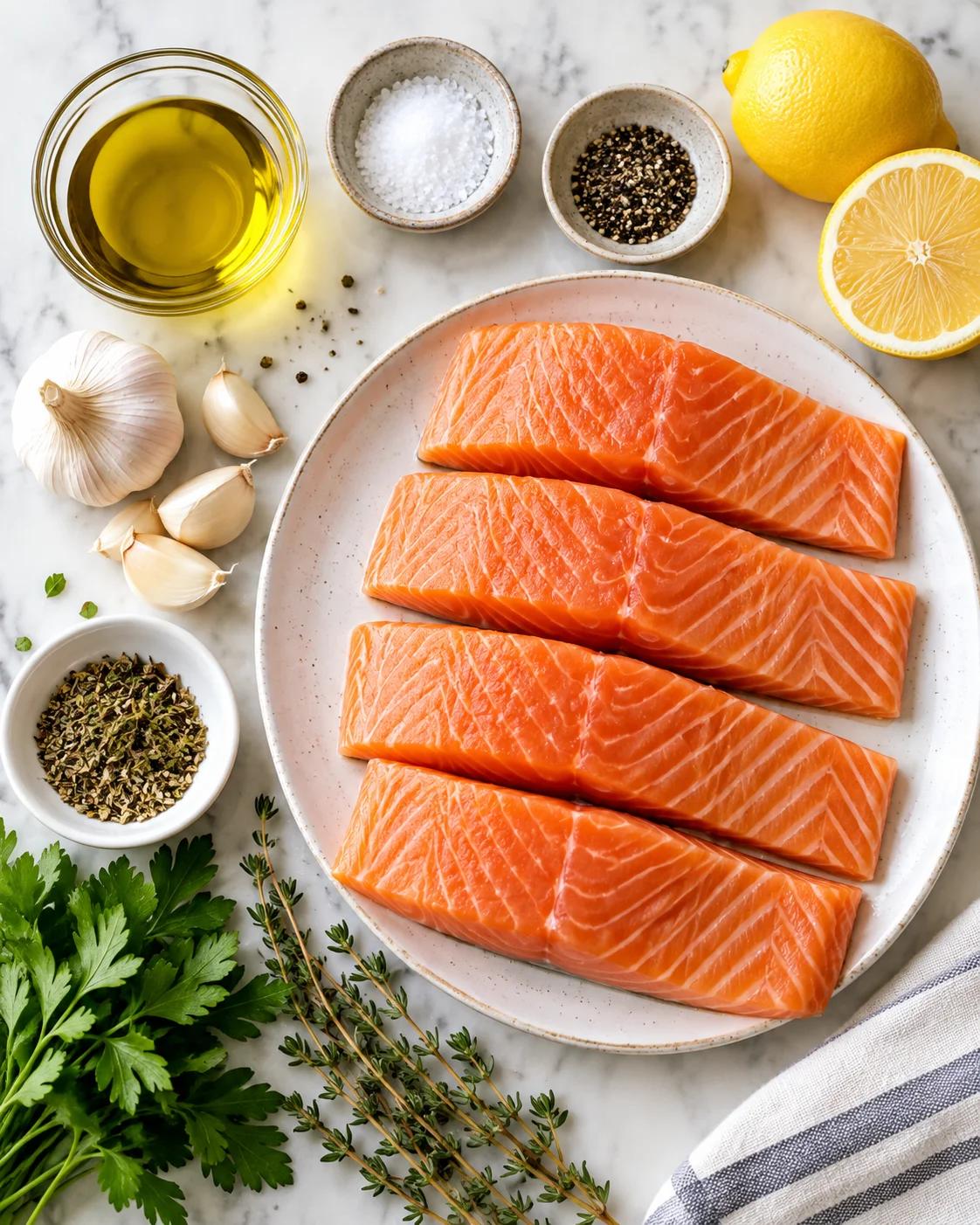
How to Make Baked Salmon
- Bring the salmon to room temperature. Set the salmon filets on the counter for 15-30 minutes, until they have at least mostly come to room temperature. This short rest helps the filets cook more evenly.
- Heat the oven and prepare the pan. Heat the oven to 450°F. Line a baking sheet with aluminum foil, or use an oven-proof, non-stick skillet such as a cast-iron pan.
- Blot the filets dry. Pat the salmon dry on all sides with paper towels. Pay particular attention to the skin side: completely dry skin is important for reducing the chance of sticking to the foil. Place each filet skin-side-down on the prepared baking sheet or in the skillet.
- Adjust thin ends if needed. If the ends of the filets are really thin, fold or tuck those ends under a little. This helps the filets cook more evenly from end to end.
- Oil and season. Brush the salmon with the 2 tablespoons of high-heat oil, coating all sides except the bottom. Sprinkle each filet with a generous pinch of salt and black pepper. Add garlic powder or any other dry seasonings you prefer. Keep the skin-side-down position in place after seasoning.
- Bake and check the doneness. Bake at 450°F, using about 4-6 minutes per half inch of thickness as a timing guide. For food safety, the FDA recommends cooking salmon until it reaches 145°F, measured in the thickest part of the filet; use 145°F as the safety target. Because salmon continues to cook a bit after it comes out of the oven, the carryover-cooking guidance is to pull it at 140°F; 135°F is the less-cooked preference option. These lower pull temperatures are not equivalent to the FDA’s 145°F safety target. The salmon should look opaque and flake easily when you insert a fork or knife and twist it slightly.
- Transfer the salmon. Remove the pan from the oven and move the filets to a clean serving plate. You may transfer them with the skin attached or leave the skin behind in the pan. A fish spatula is useful for either approach.
- Finish and serve warm. Give each filet a good squeeze of lemon juice. Add fresh herbs or a favorite sauce if you like, then serve the salmon warm.
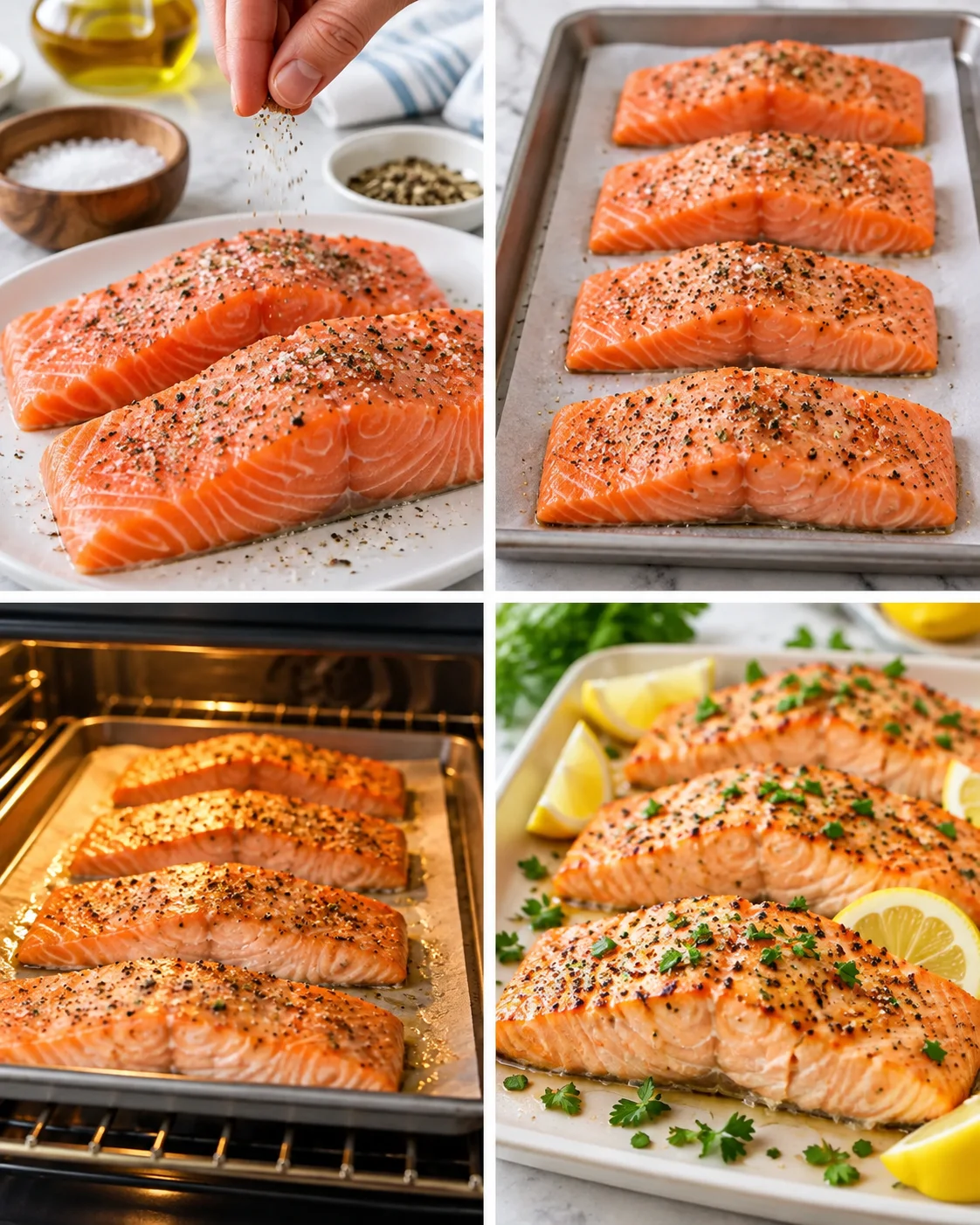
Tips for Success
- Dry the skin completely. Moisture on the skin is the main detail to address before the salmon touches the foil. Blot all sides with paper towels, and make sure the skin is completely dry before placing it skin-side-down. This helps keep the skin from sticking to the foil.
- Use thickness to judge the timing. The estimate is 4-6 minutes per half inch of thickness, measured at the thickest part of the filet. Salmon filets do not all have the same shape, so treat the time as a guide and use the thermometer or flake test to decide when they are ready.
- Check from the thickest part. Insert the thermometer into the thickest portion of the filet for the most useful reading. A wireless dual-probe thermometer can stay in the oven; an instant-read thermometer should be used when you check the fish outside the oven.
- Do not discard the skin before cooking. Even if salmon skin is not your favorite part, it helps keep the filet from drying out in the oven. It is easy to eat around the skin or remove it after baking.
- Use the visual cue as a second check. A fork or knife twisted gently in the center should show opaque fish that flakes easily. That texture cue works alongside, not instead of, the internal-temperature check.
- Let carryover cooking inform your choice. For food safety, the FDA recommends cooking salmon to 145°F in the thickest part of the filet; use 145°F as the safety target. Salmon continues to cook a bit after it leaves the oven, so the carryover-cooking guidance is to pull it at 140°F, while 135°F is the less-cooked preference option. These lower pull temperatures are not equivalent to the FDA’s 145°F safety target.
- Keep the finish fresh. Lemon juice, fresh herbs, or a finishing sauce should be added after baking. This lets you serve the filets plain for a simple meal or customize each portion at the table.
Variations and Substitutions
The base method is intentionally easy to customize. Change the flavor without changing the pan, temperature, or doneness checks.
- Use the classic seasoning blend. Garlic powder, kosher salt, and black pepper are the straightforward combination for this recipe. Seasoned salt may be used in place of plain salt, and the amount of each seasoning can be adjusted to taste.
- Choose another dry seasoning combination. Add any favorite dry seasonings that suit the meal. Salmon pairs beautifully with many seasoning styles, so the simple base can move in different flavor directions without requiring a new cooking method.
- Marinate briefly. Marinate the salmon for up to 30 minutes before baking. Keep the filets skin-on and still blot them dry before placing them on the prepared pan so the skin has the best chance of releasing from the foil.
- Finish with sauce. Serve the salmon with a favorite finishing sauce after it comes out of the oven. Fresh lemon juice and herbs are enough for a clean finish, or the sauce can provide the main flavor accent.
- Serve with or without the skin. Cook the filets skin-on for the protection it provides, then decide how to serve them. To remove the skin, run a fish spatula just above it; the salmon filet should lift right off.
- Pick a high-heat oil you already prefer. Avocado oil and canola oil are both listed options. Use the preferred high-heat cooking oil that fits your kitchen and the flavor you want.
Storage, Make-Ahead, and Freezing
Once cooked, store the salmon in a sealed container in the refrigerator for up to 2 days. You can also freeze the cooked salmon for up to 3 months.
Serving Suggestions
For the simplest finish, serve the salmon with fresh lemon wedges and let everyone add a good squeeze to their own filet. Fresh herbs make the plate feel brighter, while a favorite finishing sauce adds another layer of flavor. You can also serve the salmon plain, since the garlic, salt, pepper, and high-heat bake provide a complete starting point.
Pair the salmon with one of these side-dish combinations:
- Salads: Everyday Salad or Our Family’s Favorite Salad.
- Potatoes: Scalloped Potatoes, The Best Baked Potatoes, or Baked Sweet Potato Fries.
- Roasted vegetables: Roasted Asparagus or Perfect Roasted Brussels Sprouts.
- Fruit: Berry Fruit Salad or Winter Fruit Salad.
These pairings include salads, potatoes, roasted vegetables, and fruit. The recipe is a Main Course with an American cuisine style.
Frequently Asked Questions
Is salmon skin safe to eat?
Yes, salmon skin is safe to eat, although you can pass on it if you prefer. Cooking the filets skin-on is still highly recommended because the skin helps prevent the salmon from drying out. Serve the fish with the skin attached, or eat around it. To serve the salmon without the skin, run a fish spatula just above the skin and the filet should lift right off.
How do I prevent salmon skin from sticking to the foil?
Make sure the salmon skin is completely dry before laying the filets on the foil. Blot all sides with paper towels, with extra attention to the skin side. Set the salmon skin-side-down on the prepared foil and use a fish spatula to help lift the cooked filet away from the skin if you are leaving the skin behind.
Can I cook my salmon more or less than the recipe says?
Yes. People have different preferences, from less cooked to more well-done salmon. For food safety, the FDA recommends cooking salmon to an internal temperature of 145°F, measured in the thickest part of the filet; use 145°F as the safety target. Because salmon continues to cook a bit after it is removed from the oven, the carryover-cooking guidance is to pull it at 140°F, while 135°F is the less-cooked preference option. These lower pull temperatures are not equivalent to the FDA’s 145°F safety target.
How do I know when baked salmon is done without a thermometer?
Insert a fork or knife into the salmon and twist it a little. The fish should be opaque and flake easily. This texture check is useful, but an instant-read thermometer is the best way to check internal temperature accurately. Measure in the thickest part of the filet, especially when the filets vary in shape or thickness.
Can I bake salmon in a skillet instead of on a baking sheet?
Yes. Use an oven-proof, non-stick skillet, such as a cast-iron pan, instead of a foil-lined baking sheet. The salmon still goes in skin-side-down, and the same 450°F oven, thickness-based timing, temperature check, and flake test apply.
How long can I marinate the salmon?
You can marinate the fish for up to 30 minutes before baking. After marinating, blot the filets dry on all sides before placing them on the pan, especially if you want the skin to release cleanly from the foil. Add any final sauce after baking rather than treating it as part of the base seasoning.
More Baked Protein Tutorials
If you are building a collection of simple oven methods, related baked-protein ideas include Baked Chicken Breasts, Baked Pork Chops, Baked Tofu, Baked Steak (How To Cook Steak In The Oven), and Baked Shrimp (The Easiest Way To Cook Shrimp!).
For this recipe, keep the steps simple: bring the filets toward room temperature, dry and season them, bake at 450°F, check the thickest part, and finish with lemon. Serve warm and enjoy.