Garlic Butter Cod Recipe

This garlic butter cod recipe is one of the easiest ways to turn mild white fish into a rich, satisfying dinner. The cod is seared in a hot skillet until the bottom is deeply caramelized, then finished in a silky garlic butter sauce loosened with white wine. The result is tender, flaky fish with plenty of savory sauce for spooning over each bite.
You can have this meal on the table in 25 minutes, including 15 minutes of prep and 10 minutes of cooking. The ingredient list is short, the method uses one large skillet, and the finished cod pairs well with nearly any side. It is also naturally keto and gluten-free as written, with a hearty serving of protein and the bold flavor coming from the garlic butter rather than from a complicated seasoning blend.
There are a few visual cues that matter more than the clock here. Watch the oil closely, let the fish develop a brown crust before trying to move it, and wait for the fillets to release easily from the pan. Once the reduced wine and garlic butter come together, a quick spooning of the sauce over the opaque fish is all that stands between you and a restaurant-style seafood dinner.
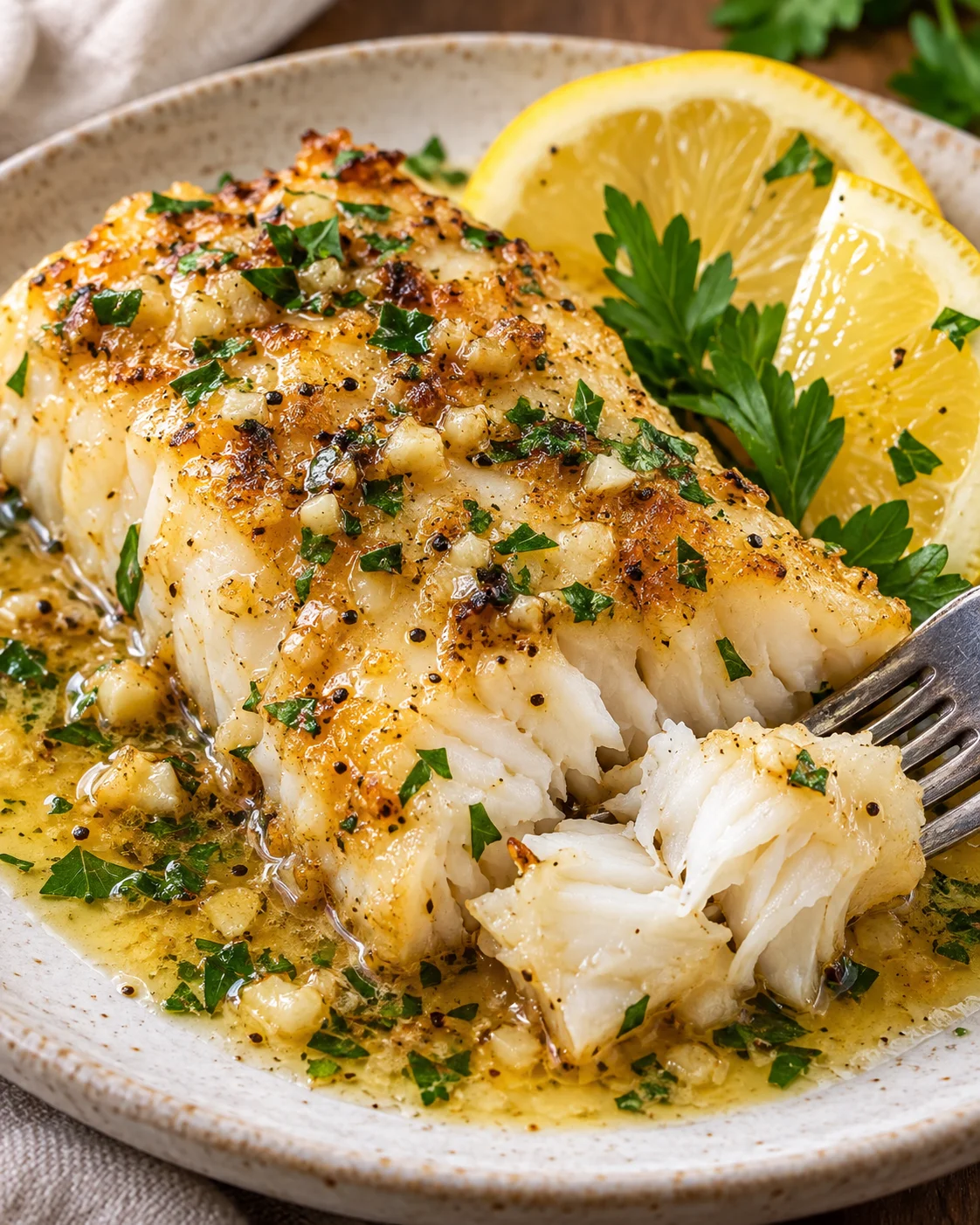
Why You Will Love This Garlic Butter Cod Recipe
- The sauce does the heavy lifting. Cod has a wonderfully mild flavor, so it is a good choice when you want a fish dinner without an especially fishy taste. The softened butter, minced garlic, garlic powder, and optional parsley create a rich, fragrant sauce that coats the fillets without hiding their delicate texture.
- The pan-seared finish adds texture. Cooking the fillets undisturbed gives the bottoms time to caramelize. The seared side becomes the deepest-flavored part of the fish, while the inside finishes moist and flaky in the sauce.
- It is quick without feeling rushed. The cod seasons while you mix the garlic butter, and the skillet heats while you pat the fish dry. Once the oil is ready, the recipe moves in a clear sequence: sear, remove the fish, reduce the wine, melt in the butter, and finish the fillets.
- It works with almost any meal plan. Serve the cod with crisp vegetables, potatoes, or another favorite side. Air fryer green beans, fondant potatoes, and bacon-wrapped asparagus with garlic aioli are especially fitting options when you want to build a fuller dinner around the fish.
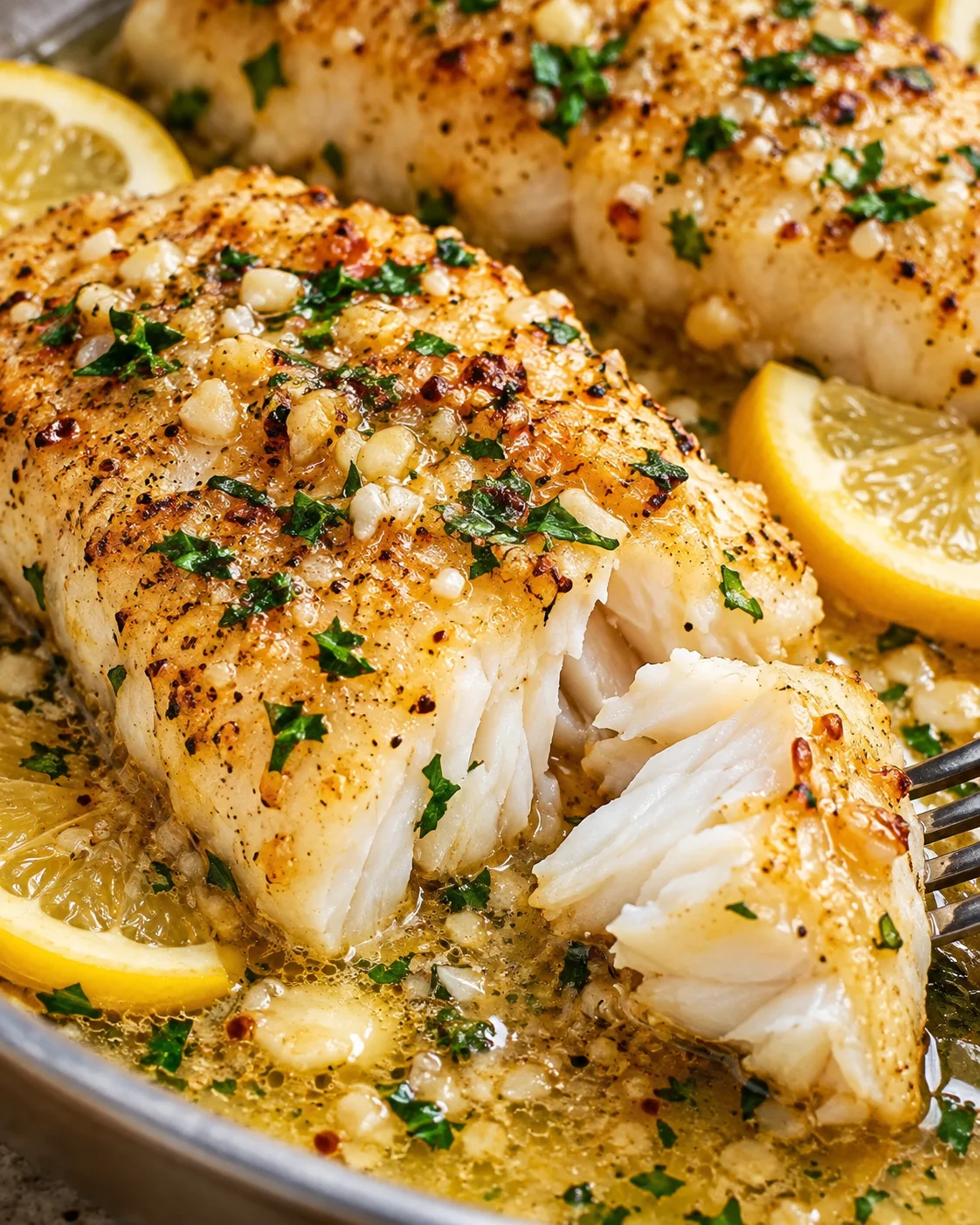
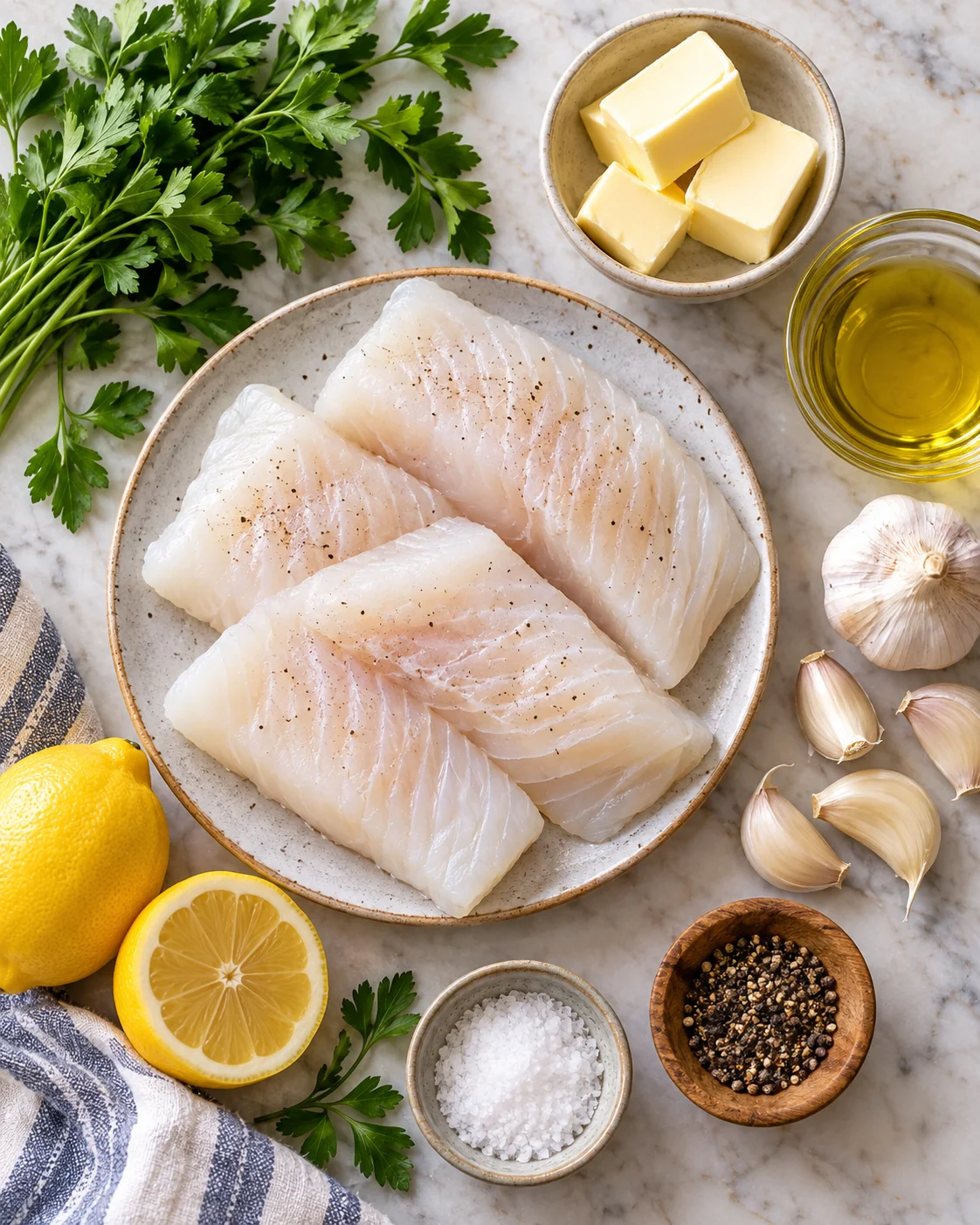
Ingredients
This recipe makes 4 servings, with one cod fillet per person. The fillets should be approximately 1 inch thick so they can brown on the outside while becoming opaque and flaky inside.
Equipment
- Cutting board
- Small bowl
- Mixing spoon
- Large skillet
- Paper towels
- Thin metal spatula, preferably a fish spatula
- Plate
For the Garlic Butter Sauce
- ½ cup softened butter: Soft butter combines more easily with the garlic and seasoning, so the sauce can melt evenly when it reaches the reduced wine.
- ½ tablespoon minced garlic
- ½ teaspoon garlic powder: Using both minced garlic and garlic powder gives the butter sauce a layered garlic flavor.
- 1 pinch salt, more or less to taste
- 1 tablespoon chopped fresh parsley, optional: Add it to the butter mixture for a fresh finish, or leave it out.
For the Cod
- 4 6-ounce cod fillets, approximately 1 inch thick
- Salt, to taste
- 1 tablespoon neutral oil: Avocado, olive, vegetable, or another neutral oil can be used.
- ½ cup white wine: Chicken stock, vegetable stock, or seafood stock can be used instead.
- Lemon wedges, optional, for serving
Timing: Plan on 15 minutes of prep, 10 minutes of cooking, and 25 minutes total. The fish is served in the same skillet sauce but should be transferred to plates seared-side up for the best presentation.
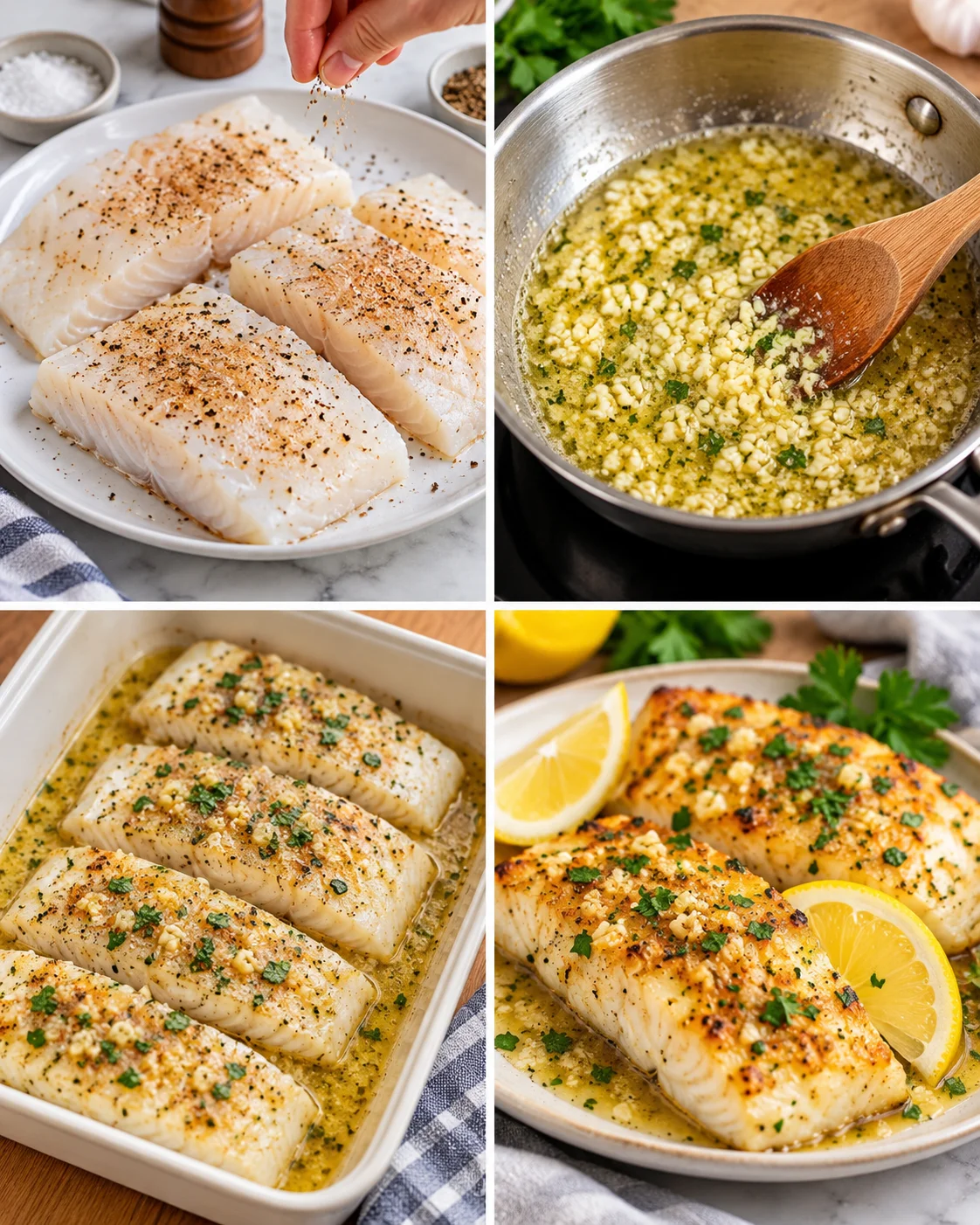
How to Make Garlic Butter Cod
- Season the cod. Place the cod fillets on a cutting board. Sprinkle salt liberally over both sides of the fillets, then set them aside while you prepare the butter mixture. Seasoning both sides gives the mild fish a little flavor of its own before the sauce is added.
- Mix the garlic butter. Add the softened butter, minced garlic, garlic powder, salt, and optional chopped fresh parsley to a small bowl. Mix with a spoon until the ingredients are thoroughly combined. Set the bowl aside so the butter is ready to add as soon as the wine has reduced.
- Heat the skillet and dry the fish. Heat a large skillet over medium-high heat for approximately 2 minutes. While the skillet warms, use paper towels to pat the cod fillets completely dry. Removing surface moisture helps the fish sear instead of releasing excess water into the pan.
- Heat the oil carefully. When the skillet is hot, add the neutral oil and swirl the pan to spread it around. Keep the heat at medium-high and watch closely. The oil heats quickly; it is ready when wisps of smoke just begin to rise. Do not let the oil sit over high heat long enough to smoke heavily, because an overly hot pan can burn the outside of the fish.
- Sear the first side. Immediately place the cod fillets in the skillet, spacing them apart so they have room to brown. Put them skin-side down, or place the side of the fillet where the skin used to be down. Lower the heat to medium and cook the fillets undisturbed for 4 minutes, or until the bottoms begin to caramelize and turn a rich brown color.
- Wait for the fish to release. Carefully try to lift each fillet with a thin metal spatula, ideally a fish spatula. The fillets should lift easily, or stick in only 1 or 2 spots. If a fillet resists and you have to work the spatula underneath it, leave it in the skillet and continue cooking until it releases easily. When ready, transfer the cod to a plate and set it aside. Avoid forcing the fish loose, which can tear the caramelized surface.
- Reduce the wine. Pour the white wine into the skillet. Use the spatula to scrape up any browned bits stuck to the bottom of the pan; those bits add savory flavor to the sauce. Bring the wine to a boil, then reduce the heat to medium-low. Simmer until the liquid is reduced by 50%.
- Finish the sauce and cod. Add the prepared garlic butter to the reduced wine. Gently stir until the butter is completely melted and the sauce is combined. Return the cod fillets to the skillet with the browned sides facing up. Tilt the skillet slightly and spoon the garlic butter sauce over the fillets repeatedly until the fish turns opaque and can be easily flaked with a fork. Taste the sauce and add salt to taste.
- Serve immediately. Transfer the fish to serving plates, keeping the seared side up. Squeeze a lemon wedge over each fillet if desired, then serve immediately with additional lemon wedges and your chosen sides.
Tips for Success
- Keep an eye on the oil. The oil will heat up very quickly in a hot skillet. The first wisps of smoke are the cue to add the cod; do not walk away from the pan during this step. If the oil becomes heavily smoky before the fish is in the pan, pull the skillet from the heat briefly and let it settle before continuing.
- Dry the fillets thoroughly. Patting the cod dry with paper towels is a small step that makes a meaningful difference to browning. Wet surfaces can make it harder for the bottom to caramelize.
- Trust the release more than the timer. The fillets should take about 4 minutes on the first side, but thickness and pan conditions can vary. The bottom should be rich brown, and the fish should lift easily. If it sticks too much, cook it for another minute or two and check again.
- Give the fillets space. A crowded skillet can make the cod steam rather than sear. Use a large skillet and space the four fillets apart as much as possible.
- Use the spatula gently. A thin metal spatula can slide under the fish without disturbing the crust. Once the fish releases, transfer it to a plate rather than trying to turn it repeatedly.
- Do not skip the reduction. Simmering the wine until it is reduced by 50% concentrates its flavor and gives the butter a more flavorful base. Once the butter is added, stir gently rather than boiling the sauce hard.
- Look for opaque, flaky fish. The final cue is visual and textural: the cod should turn opaque and flake easily with a fork as you spoon the sauce over it. Add salt only after the sauce and fish have come together, since the butter, wine, and stock choice can all affect the final seasoning.
Variations and Substitutions
The basic method is flexible while keeping the same pan-seared character. For the cooking oil, use 1 tablespoon of avocado oil, olive oil, vegetable oil, or another neutral oil. Choose an oil that you already enjoy with fish and that can handle the heat of a hot skillet.
White wine is not required. Replace the ½ cup white wine with chicken stock, vegetable stock, or seafood stock. The stock will still give the browned bits and garlic butter a liquid base, but the finished flavor will vary with the stock you choose. If you are serving someone with dietary restrictions, check the label on any prepared stock.
Fresh parsley and lemon wedges are both optional. Add the 1 tablespoon chopped fresh parsley to the garlic butter for a fresh note, or leave it out for a simpler sauce. Finish with lemon wedges at the table, squeeze lemon over the fish before serving, or skip the lemon if you prefer the sauce without its bright citrus accent.
If the fillets have skin, place them skin-side down. If they are skinless, use the side where the skin used to be as the first searing surface. Keep the browned side facing up when you return the cod to the sauce so the caramelized surface remains visible at the table.
Storage, Make-Ahead, and Reheating
This cod is best served immediately, while the seared surface is at its most distinct and the butter sauce is warm. If you have leftovers, transfer the fish and sauce to a covered container and refrigerate them. Keep the fish with as much sauce as possible so it does not dry out in storage.
For a simple make-ahead step, mix the softened butter, garlic, garlic powder, salt, and optional parsley in advance and keep the mixture covered until you are ready to cook. The fish itself is best seasoned, dried, and cooked close to serving time so the skillet can create its browned crust.
Reheat leftovers gently until warmed through, using the sauce to help keep the cod moist. Avoid aggressive high heat, which can make already-cooked fish dry and cause the butter sauce to separate. Add fresh lemon only after reheating, if desired.
Serving Suggestions
Serve each fillet seared-side up and spoon extra garlic butter sauce over the top. Lemon wedges can be placed on the plates or passed at the table so everyone can add as much citrus as they like. Since the cod is mild and the sauce is rich, a simple vegetable side makes an easy balance.
This dish pairs well with almost anything. Air fryer green beans bring a crisp vegetable contrast, while fondant potatoes are a hearty choice for catching the sauce. Bacon-wrapped asparagus with garlic aioli makes the meal more substantial when you are serving guests or building a special dinner. Keep the sides simple enough that the tender fish and garlic butter remain the focus.
Frequently Asked Questions
How thick should the cod fillets be?
Use four fillets that weigh 6 ounces each and are approximately 1 inch thick. Similar thickness helps the fillets cook at a comparable rate, but use the visual cues in the method rather than relying on the timer alone.
Why is my cod sticking to the skillet?
The fish may need more time to brown. Cook the fillet undisturbed until the bottom caramelizes and it lifts easily with a thin metal spatula. If it sticks in more than 1 or 2 spots or the spatula has to be forced underneath, continue cooking for another minute or two and check again.
How do I know when the cod is done?
After the fish returns to the skillet, spoon the sauce over it until the fillets are opaque and can be easily flaked with a fork. The recipe emphasizes those visual and textural signals instead of adding a separate internal temperature or a rigid final timer.
Can I use stock instead of white wine?
Yes. Use ½ cup chicken stock, vegetable stock, or seafood stock instead of the ½ cup white wine. Bring the liquid to a boil, then simmer over medium-low heat until it has reduced by 50% before adding the garlic butter.
Can I use olive oil for searing the cod?
Yes. The recipe calls for 1 tablespoon of neutral oil and specifically allows avocado, olive, vegetable, or similar oils. Whichever oil you use, heat it only until wisps of smoke begin to rise and add the fish right away.
Is this garlic butter cod recipe keto and gluten-free?
As written, this recipe is naturally keto and gluten-free. It contains cod, butter, garlic, oil, white wine or stock, parsley, salt, and optional lemon. If you use a prepared stock in place of the wine, check its ingredient label for your own dietary needs.
Approximate Nutrition
The approximate information below is for one serving, defined as 1 garlic butter cod fillet:
- Calories: 402 cal
- Protein: 31 g
- Fat: 28 g
- Saturated Fat: 15 g
- Trans Fat: 1 g
- Cholesterol: 134 mg
- Sodium: 287 mg
- Potassium: 745 mg
- Total Carbs: 1 g
- Fiber: 0.1 g
- Sugar: 0.3 g
- Net Carbs: 1 g
- Vitamin A: 861 IU
- Vitamin C: 3 mg
- Calcium: 40 mg
- Iron: 1 mg
The total number of servings shown is approximate, and the actual number of servings depends on your preferred portion sizes. Nutritional values are general guidelines for 1 serving using the listed ingredients and do not include optional ingredients. Actual macros may vary slightly depending on the specific brands and types of ingredients used.
To determine the weight of one serving, prepare the recipe as instructed. Weigh the finished recipe, excluding the weight of the container, then divide the finished-recipe weight by the desired number of servings. The result is the weight of one serving.