Crispy Beer-Battered Fish and Chips Recipe

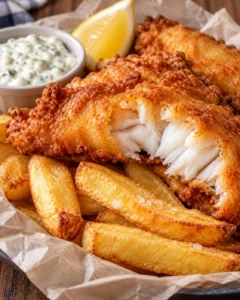
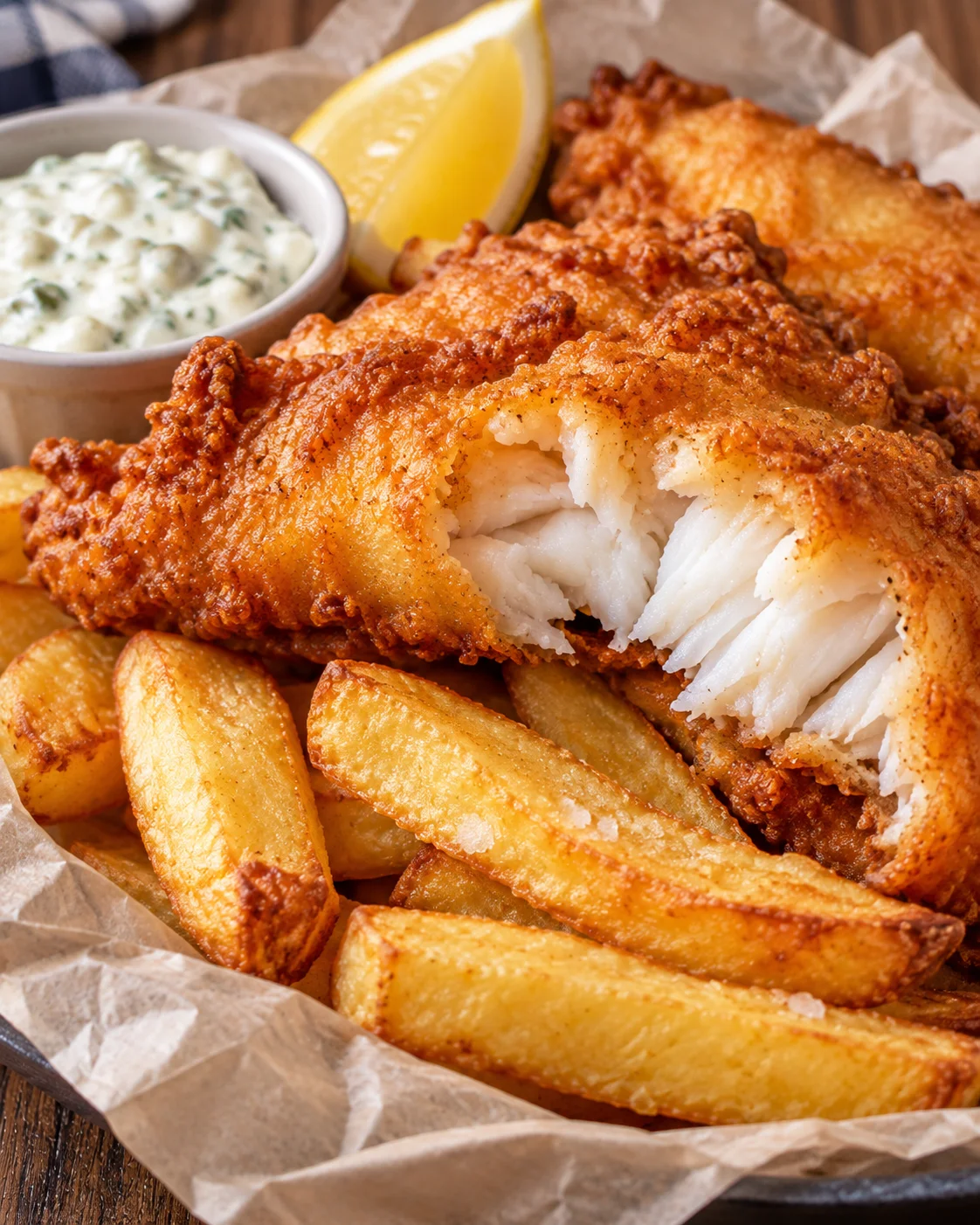
This fish and chips recipe brings the classic British chippy supper into your kitchen: thick white fish in a light, golden beer batter, plus chips that are soft inside and crisp after a second fry. The method is practical, the ingredients are straightforward, and the finished meal is made for serving hot with salt and malt brown vinegar.
Beer gives the batter extra flavor, while its fizz helps create a light, crispy coating. You can use cod, haddock, pollock, whiting, catfish, or another meaty, thick-filleted white fish. The recipe uses frozen cod, although fresh cod works when it is available. For the chips, starchy potatoes such as Maris Piper help provide a crisp outside and a fluffy interior.
Fish and chips are closely tied to British seaside traditions and the familiar “chippy.” The meal is especially good for a gathering because the fish can be fried in batches, kept warm in the oven, and joined by the chips for a final crisping just before serving. Follow the order below, and pay particular attention to drying the fish and potatoes before they meet the oil.
A Little History Behind Fish and Chips
Fish and chip shops grew with the popularity of fishing trawls and the arrival of railways that could carry fresh fish farther inland. The first fish and chip shop opened in London in 1860, offering the working class cheap, readily available fish. At that time, the fish and chips were cooked in a large cauldron filled with beef dripping over hot coals.
The dish became a staple across the country. Its importance was reflected during the Second World War, when fish and chips were exempt from food rationing. Today, fish and chip shops can be found throughout Great Britain. Many have broadened their menus to include pies, kebabs, and burgers, in part because rising fish prices have reduced how often people buy the classic meal. There have also been reports of some shops selling a less expensive fish while describing it as cod.
Why You Will Love This Recipe
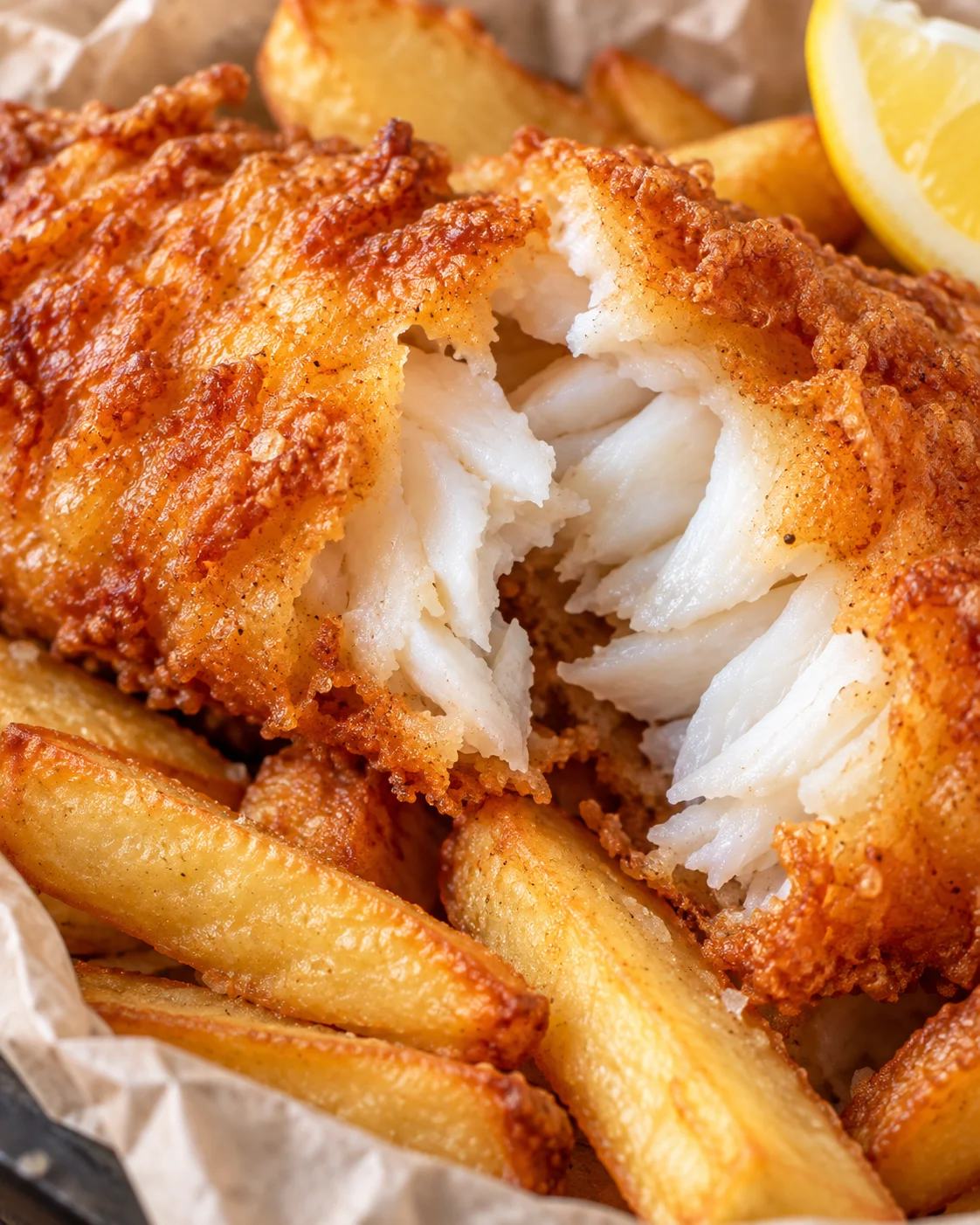
The defining feature of this fish and chips recipe is the batter. Every chippy has its own version, but this one uses flour, milk, olive oil, water, baking powder, salt, and fizzy lager or beer. The beer replaces the water used in a simpler batter, adding flavor and bubbles. The result is designed to be light, crispy, and golden rather than heavy.
The method also builds texture in stages. The chips are fried gently first, just until they soften and remain pale. After the fish is cooked, they return to the fryer for three minutes so they can brown and crisp. Meanwhile, each piece of battered fish is drained on kitchen paper and kept warm in a 150C, 300F, Gas 2 oven while the remaining pieces cook.
There is a small but important preparation detail that makes a big difference: the fish must be dried and coated with seasoned flour before it goes into the batter. That flour gives the wet batter something to hold on to. Without it, the batter can slide off before the fish reaches the fryer.
Ingredients
The Fish
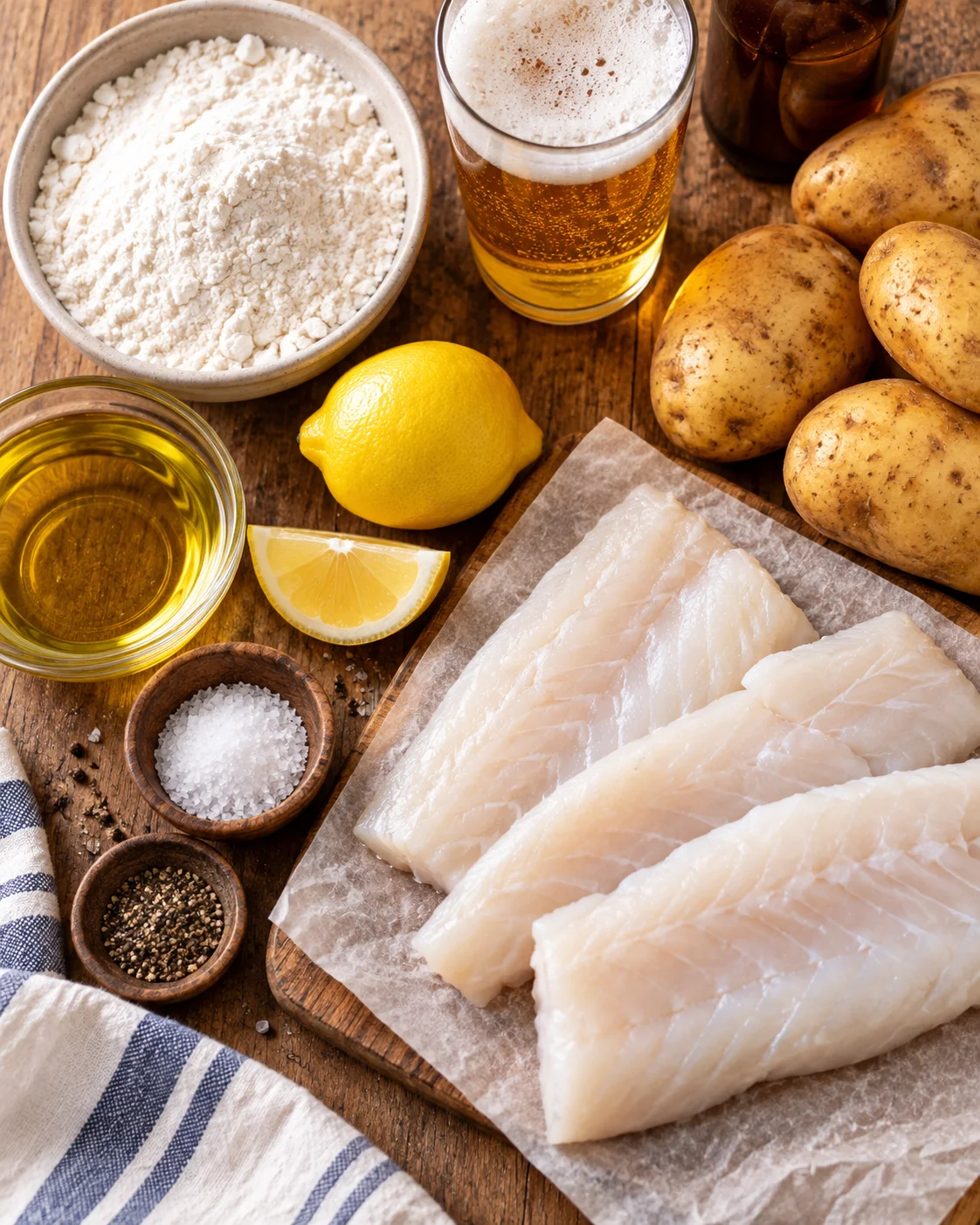
- Cod, haddock, pollock, whiting, or catfish. Any meaty, thick-filleted white fish works for this style. The recipe uses frozen cod because fresh fish can be extremely expensive.
- 1 cup flour, seasoned with salt and pepper, for coating the fish.
- Vegetable oil for deep frying; calculate the amount according to the size of your pan.
- Approximately 150 g (5 oz) fish per person. Try to choose fillets about 2 cm or more in thickness.
The Fish Batter
- 100 g or 1 cup all-purpose flour
- 1 1/2 teaspoons baking powder
- 7 tablespoons milk
- 1/2 tablespoon olive oil
- 1 tablespoon water
- A pinch of salt
- 6 tablespoons fizzy lager or beer. A light beer works best, and fizzy water can be used instead.
The Chips
- Roughly 2 medium-sized potatoes per person, peeled and cut into finger-thickness chips, about 2 cm thick.
King Edwards, Desiree, and Maris Piper are all good potato choices for chips. Chip shops commonly use Ramos, Agria, or Maris Piper potatoes. Maris Piper is used here because it is more widely available, and its starch helps the chips develop a crisp coating while staying fluffy inside.
For Serving
- Salt
- Malt brown vinegar
Equipment You Will Need
- A saucepan large enough to be filled one-third deep with oil, or a deep fryer
- Kitchen paper
- A baking tray
- Newspaper and greaseproof paper cut into halves; allow a double layer of newspaper per portion
How to Make This Fish and Chips Recipe
- Prepare the fish and oven. If you are using frozen fish, defrost it. Turn the oven on to 150C, 300F, Gas 2. This oven will be used to keep cooked fish warm as you finish the remaining batches.
- Heat the oil. Heat the oil in the fryer or pan until it reaches 180C / 350F. The same oil will be used for the first fry of the chips and for the fish, with the temperature adjusted as the recipe moves along.
- Check and portion the fish. Check the fish for bones. If a fillet has a thick part and a thin part, cut the thin part away and cook it separately so it does not overcook while the thicker portion finishes. Pat every piece dry with kitchen paper.
- Coat the fish in seasoned flour. Mix the flour with salt and pepper in a shallow dish. Cover the fish completely, then shake off any loose flour. Do not skip this coating: the dry flour helps the batter cling to the fish.
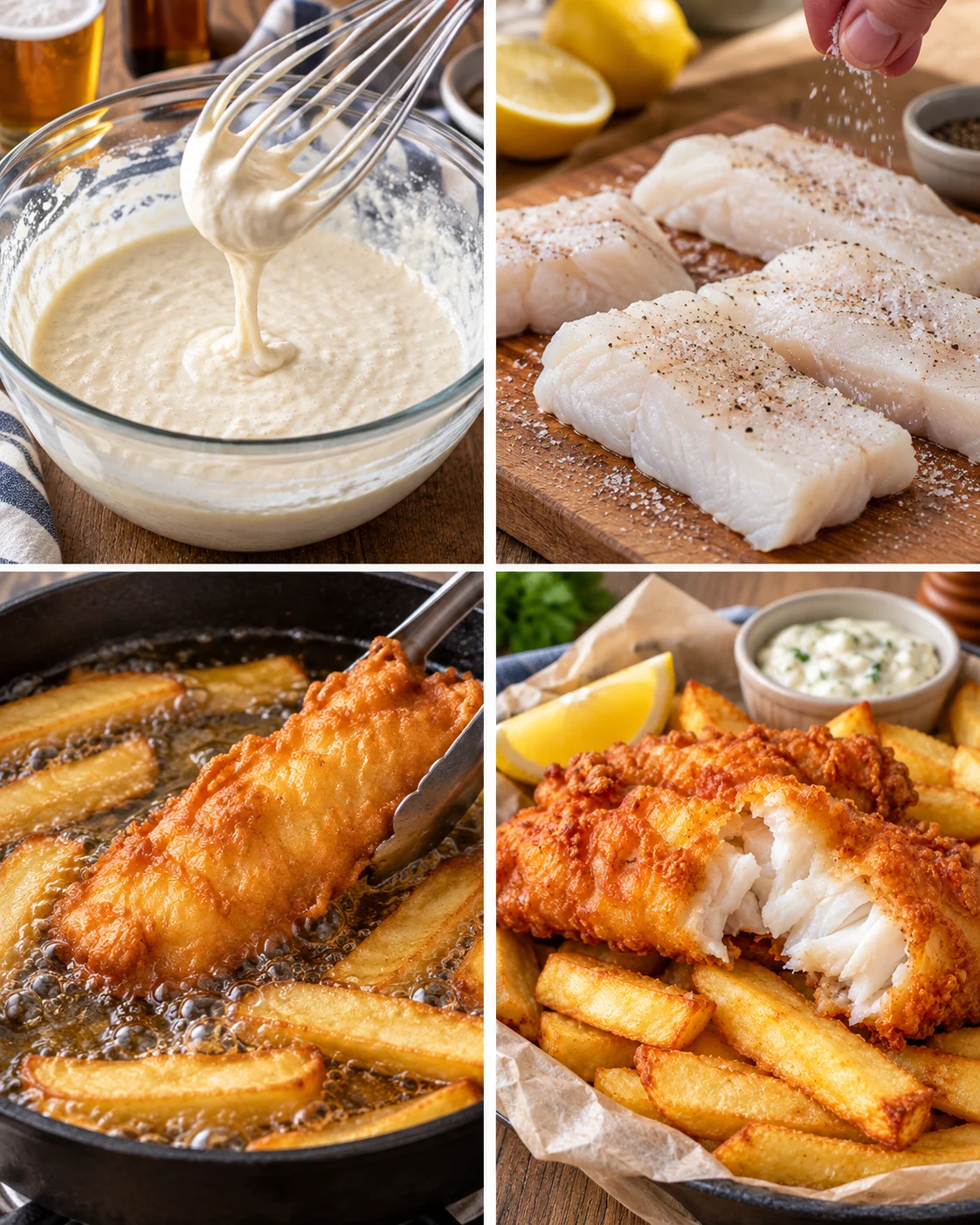
- Start the batter. Add all of the batter ingredients except the beer or fizzy water. Give the mixture a light whisk. Lumps are fine at this stage; the batter does not need to be beaten smooth.
- Cut and dry the potatoes. Peel the potatoes and cut them into chip shapes about 2 cm thick. Rinse them, then pat them dry with a clean tea towel. They need to be as dry as possible before frying so they can become crisp. If you prefer not to deep fry the chips, an oven-fries preparation is another route; the detailed method here follows the traditional fryer method.
- Give the chips their first fry. Carefully place the chips into the fryer or pan and cook gently for approximately 8 minutes. They should become soft while remaining pale. Test one with a sharp knife; it should feel soft inside. Remove the chips and place them on the baking tray while you cook the fish. They will return to the fryer later for their crisping fry.
- Check oil temperature without a thermometer. If you do not have a thermometer, drop in a little batter or the end of a chip. It should sizzle and rise to the surface.
- Finish the batter. Add the fizzy beer or fizzy water to the flour mixture and gently combine it. The batter should have the consistency of pouring cream or yogurt. If it is too thick, add a little more of the fizzy liquid.
- Prepare the draining tray. Increase the oil heat to 180C / 350F for the fish. Place a few sheets of kitchen paper on the baking tray; this is where the cooked fish will drain before it goes into the warm oven.
- Batter and fry the fish in batches. Cook one or two pieces at a time, depending on the size of your pan or fryer. Hold a piece by one end, place it in the batter, and coat it well. Lift it out and let the excess batter drip away for about 5 seconds. Gently lower the fish into the hot oil. Cook for 7 to 8 minutes, until the coating is crisp and golden brown. If the batter begins to brown too quickly, turn the temperature down a little.
- Keep the fish warm. Place each cooked piece on the kitchen paper and keep it warm in the oven while you fry the remaining fish in the same way. Add each finished piece to the oven as it is ready.
- Clear the floating batter. When all the fish is cooked, scoop any loose bits of batter from the pan or fryer. In Britain, these pieces are called “scraps,” and a chippy may give them away to eat with chips. They are a traditional extra, although they are not considered very healthy.
- Fry the chips again. Return the partly cooked chips to the fryer and cook for 3 minutes, until they are brown and crispy. Drain the excess oil using kitchen paper.
- Serve immediately. Arrange the chips and fish on the greaseproof paper set over the newspaper. Serve while everything is still hot and crispy. Sprinkle with salt, shake over malt vinegar, and enjoy the meal from the paper with your fingers.
Tips for Success
Dry the fish before flouring
Kitchen paper is useful twice: first to dab the fish dry, and later to drain the fried pieces. A dry surface accepts the seasoned flour more evenly. Once the fish is covered, shake off loose flour so the batter forms a coating rather than collecting in thick patches.
Keep the potatoes as dry as possible
Rinsed potatoes should be patted dry with a clean tea towel before they go near the oil. Moisture works against the crisp texture you want, while the two-stage frying process gives the potatoes time to soften first and brown later.
Do not smooth out every batter lump
The first mixing stage calls for a light whisk, and small lumps are fine. The fizzy liquid is added afterward and mixed gently. Aim for a batter that flows like pouring cream or yogurt. If it is too thick, loosen it with a little of the beer or fizzy water rather than stirring aggressively.
Work in small fish batches
One or two pieces at a time is the guide, with the exact batch size depending on your pan or fryer. The fish should have room to cook in the hot oil, and the thin portions should be cooked separately from thick portions so they do not overcook.
Watch the color
The fish is ready when the batter is crispy and golden brown after 7 to 8 minutes. If the coating is turning brown too quickly, lower the temperature slightly. The chips should still be pale after their first fry and brown and crisp after their three-minute return to the oil.
Set up the draining and warming stations first
Before the fish goes into the oil, have the baking tray ready with kitchen paper and have the oven warming at 150C, 300F, Gas 2. The fish is cooked in batches, so a prepared tray gives each piece a place to drain without delaying the next batch. The warm oven then holds the cooked pieces while the rest of the fish cooks. After the last fish is done, clear the floating batter from the fryer before returning the partly cooked chips. This order keeps the fish and chips on their separate stages: the fish stays warm, while the chips get their final brown, crisp finish at the end.
Use the paper-lined presentation thoughtfully
The newspaper and greaseproof paper are part of the traditional serving style, but the food should rest on the greaseproof or parchment layer rather than directly on the print. Cut the paper into halves as listed with the equipment, and allow a double newspaper layer for each portion. Once the fish has drained and the chips have shed excess oil, arrange both on the lined paper and season just before eating. This is the point to add salt and malt brown vinegar, rather than trying to season the fish while it is still being fried.
Variations and Substitutions
Choose a different white fish. Cod and haddock are common choices, but the recipe also names plaice, halibut, flounder, tilapia, pollock, whiting, and catfish as fish used by shops. For the ingredient list, choose a meaty, thick-filleted white fish, and allow about 150 g (5 oz) per person. This version uses frozen cod; fresh cod can also be used when it is available from a fishmonger.
Use fizzy water instead of beer. Beer is used in place of water for flavor and lift, but soda or carbonated water can be used in the same quantity. The batter ingredient list calls for 6 tablespoons of fizzy lager or beer, so use 6 tablespoons of fizzy water for that alternative. A light beer is the preferred beer option.
Select the potatoes available to you. Maris Piper, Ramos, Agria, King Edwards, and Desiree are all named as good choices for chips. The important preparation points remain the same: peel and cut them to about 2 cm, rinse, dry thoroughly, fry until soft and pale, and return them to the oil for 3 minutes at the end.
Storage, Make-Ahead, and Freezing
Serve this meal immediately after the final fry, while the fish is hot and crispy and the chips are brown and crisp.
Serving Suggestions
The traditional finishing touch is simple: salt and malt brown vinegar added just before eating. At a British chippy, fish and chips were once wrapped in newspaper, with the seasoning added before the parcel was closed. Modern takeaways generally use a polystyrene box instead because of hygiene concerns.
For a home presentation, place greaseproof or parchment paper over the newspaper so the food does not touch the print. Use the double newspaper layer listed in the equipment, and serve the fish and chips from the paper while they are still hot. Mushy peas are a familiar accompaniment with this style of meal.
If you want a sauce alongside the vinegar, the recipe pairs well with tartar sauce, garlic butter sauce for seafood, or Yum Yum sauce. These are optional serving companions; the core finish remains salt and vinegar.
Frequently Asked Questions
What fish is best for fish and chips?
Cod and haddock are the most familiar choices in chip shops. You can also use a meaty, thick-filleted white fish such as pollock, whiting, catfish, plaice, halibut, flounder, or tilapia. Choose fillets about 2 cm or thicker when possible, and allow approximately 150 g (5 oz) per person.
Can I use frozen cod?
Yes. The recipe uses frozen cod. Defrost it before cooking, check for bones, and pat it completely dry with kitchen paper. Fresh cod can also be used when it is available from your fishmonger.
Why does the batter slide off fish?
The fish may not have been dried or floured thoroughly. Dab the fish dry, coat it completely in seasoned flour, and shake away the excess before dipping it into the batter. The flour coating helps the batter stick while the fish is being moved to the fryer.
Can I make the batter without beer?
Use fizzy water, soda, or carbonated water in the same quantity instead. The recipe calls for 6 tablespoons of fizzy beer or lager, and a light beer works best when you do use beer.
Why are there lumps in the batter?
Small lumps are not a problem. The batter ingredients are first given a light whisk, and the fizzy liquid is added afterward and mixed gently. The finished mixture should pour like cream or yogurt; loosen it with a little more fizzy liquid if it is too thick.
How do I know the oil is hot enough without a thermometer?
Drop in a little batter or the end of a chip. It should sizzle and rise to the surface. A thermometer can be used to check the stated 180C / 350F frying temperature, but the recipe includes this simple visual cue as an alternative.
Why are the chips fried twice?
The first fry, which takes approximately 8 minutes, softens the potatoes while they remain pale. They rest on the baking tray while the fish cooks, then return to the fryer for 3 minutes to become brown and crispy.
How many pieces of fish should I fry at once?
Cook one or two pieces at a time, depending on the size of your pan or fryer. Let the battered fish drip for about 5 seconds before lowering it gently into the oil, then keep finished pieces warm in the 150C, 300F, Gas 2 oven while the remaining batches cook.
Nutrition Information
The recipe card lists a yield of 4 and a serving size of 1. The listed amount per serving is:
- Calories: 991
- Total fat: 20 g
- Saturated fat: 3 g
- Trans fat: 0 g
- Unsaturated fat: 15 g
- Cholesterol: 208 mg
- Sodium: 896 mg
- Carbohydrates: 96 g
- Fiber: 5 g
- Sugar: 6 g
- Protein: 86 g