Salmon Rice Bowl with Crispy Bang Bang Salmon Bites

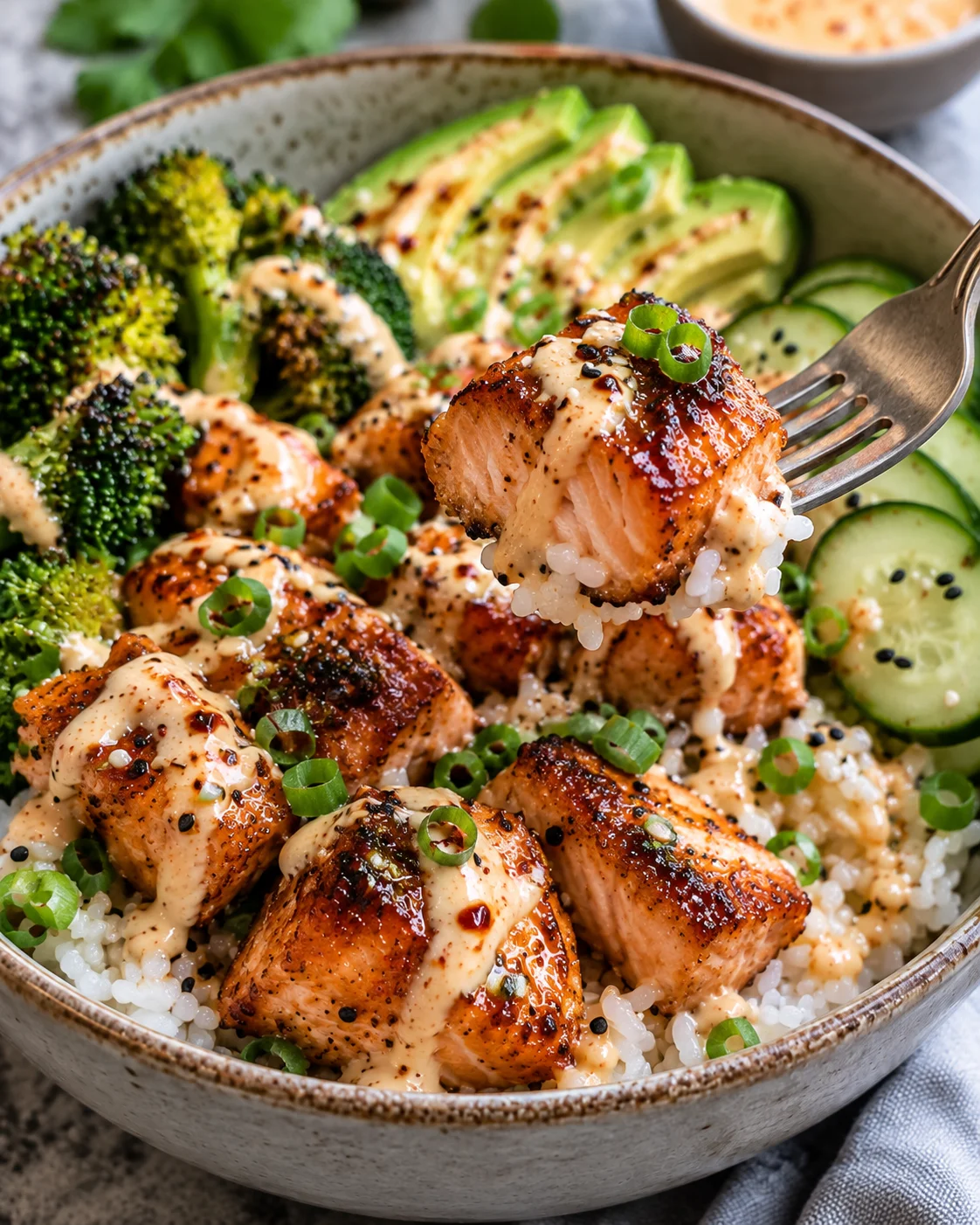
This salmon rice bowl brings together crispy glazed salmon bites, steamed rice, fresh vegetables, creamy avocado, and a generous drizzle of bang bang sauce. The salmon is browned in a hot skillet, then coated in a sweet, garlicky, gently spicy sauce so every bite has plenty of flavor. Pickled cucumber salad, broccoli, and rice make the bowl feel complete without making the method complicated.
The salmon bites are inspired by crispy sesame salmon, with bang bang sauce added to turn the fish into a saucy bowl dinner. The result is a weeknight-friendly meal with contrasting textures: crisp-edged salmon, tender rice, snappy vegetables, creamy avocado, and cool cucumber. The salmon portion makes two generous bowls, and the rice, sauce, and vegetables are easy to prepare in the same cooking window.
If you enjoy salmon and big bowls of food, this is a useful format to keep in your dinner rotation. It brings protein, omega-3 fatty acids, fiber, complex carbohydrates, micronutrients, and plenty of flavor to the table. You can also prepare the components in parts when you want an easier meal-prep approach.
Why You Will Love This Salmon Rice Bowl
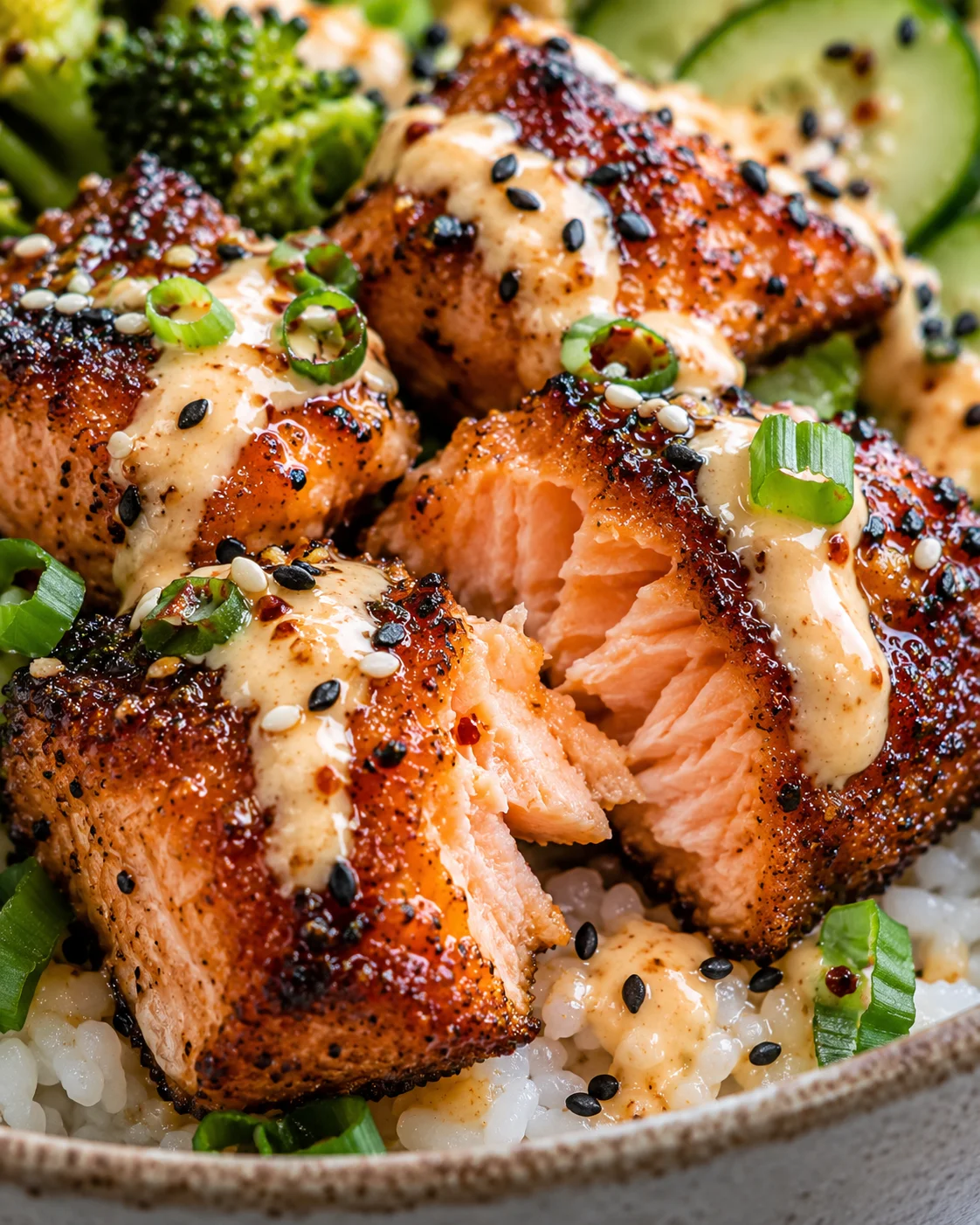
There is a lot to like here, starting with the salmon. Cutting the filet into small cubes gives each piece plenty of surface area for browning and glazing. The salmon cooks quickly, and the hot skillet creates a golden-brown exterior before the sauce goes in. Turning the pieces as they finish lets the sauce cling to the fish instead of leaving it in a separate puddle.
Bang bang sauce is a creamy sauce with a sweet flavor and a gentle kick. It adds richness and texture to the bowl, while the salmon sauce brings coconut aminos, rice vinegar, garlic, sriracha, and toasted sesame oil together for sweet, savory, garlicky flavor. If you prefer less heat, the sauce is easy to mellow.
The bowl itself is flexible without losing its character. The base is steamed brown rice with sauteed, steamed, or roasted broccoli, avocado, and cucumber salad. Add edamame, kimchi, pickled vegetables, or mango salsa if you have them on hand, or use cauliflower rice for a low-carb option. You can also finish the bowls with teriyaki sauce, extra coconut aminos, green onions, and sesame seeds.
Ingredients
Bang Bang Sauce
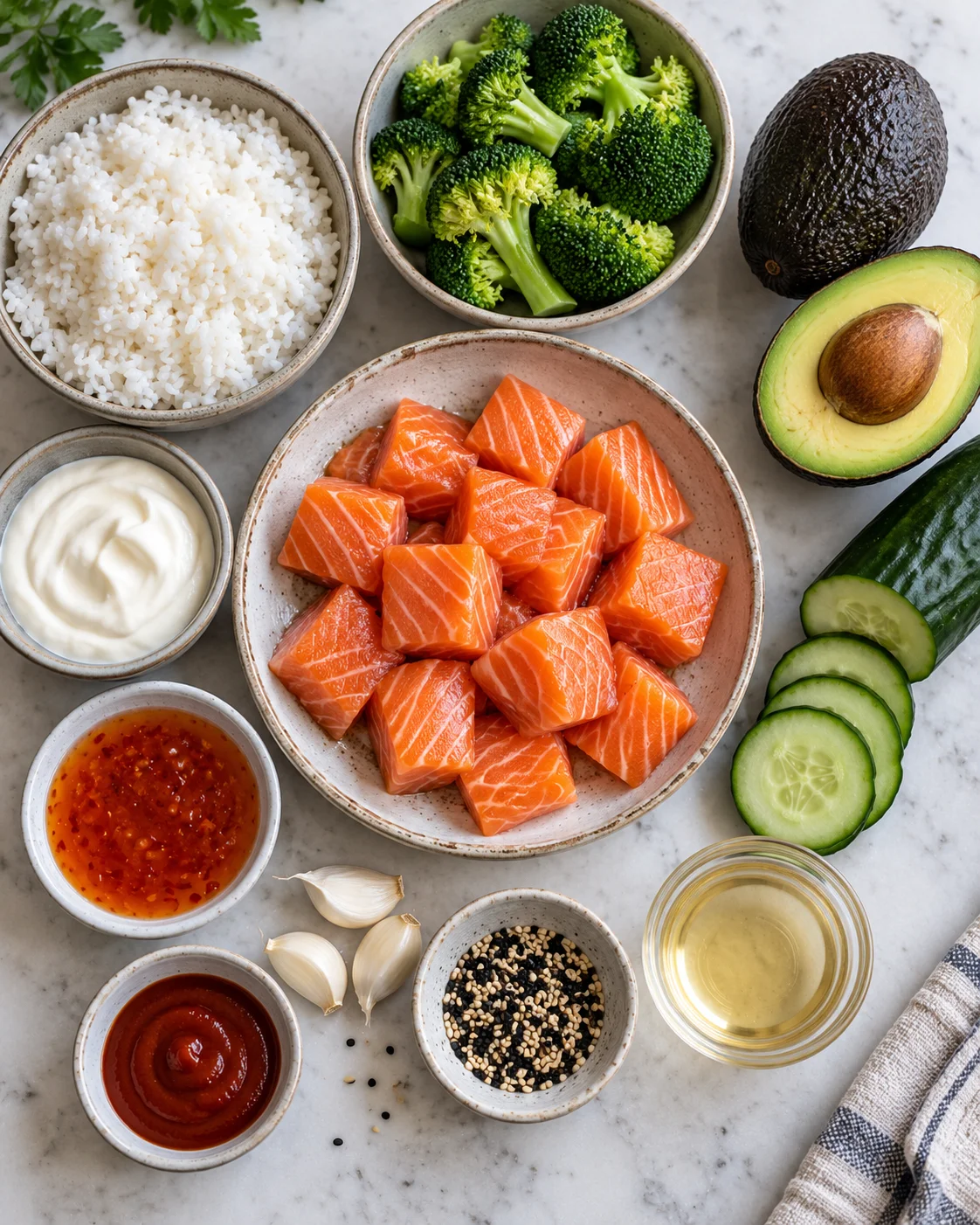
- 1/3 cup plain Greek yogurt, or mayonnaise: Greek yogurt makes a creamy base, while mayonnaise gives the sauce a richer texture.
- 4 tablespoons sweet chili sauce: This supplies the sauce’s sweetness and helps create its characteristic flavor.
- 2 teaspoons sriracha: This makes the sauce slightly spicy. Omit it for a milder sauce.
For the Salmon Bites
- 1 tablespoon avocado oil, for cooking.
- 1 pound salmon filet, chopped into bite-sized chunks. Fresh salmon is recommended when possible. Wild-caught salmon, King salmon, or Atlantic salmon are recommended over sockeye salmon for the best results.
- 1/2 cup coconut aminos. See the substitution note below for liquid aminos or low-sodium soy sauce.
- 1 tablespoon rice vinegar.
- 2 large cloves garlic, minced.
- 1 teaspoon sriracha, optional.
- 2 teaspoons toasted sesame oil, optional.
The salmon sauce is intentionally simple. Coconut aminos bring umami and a little sweetness, rice vinegar keeps the flavor lively, garlic adds depth, and the optional sriracha and sesame oil give you more heat and toasted aroma. The recipe also works with salmon skin left on or with skinless fillets.
For the Bowls
- 1 batch Asian Cucumber Salad. Prepare the linked salad according to its recipe, then allow it to sit before assembling the bowls.
- 3 cups cooked brown rice. For two people, about 1 cup of dry rice usually cooks into approximately 3 cups of cooked rice. Cook the rice according to the package instructions.
- 1 large head broccoli, chopped into florets.
- 1 large ripe avocado, sliced.
Most of the ingredients are pantry or refrigerator staples that last well enough to use in future sauces and meals. The bowl also welcomes favorite toppings, including edamame, kimchi, pickled vegetables, and mango salsa or another fruit salsa.
How to Make This Salmon Rice Bowl
1. Prepare the Cucumber Salad
Add all the cucumber salad ingredients to a small bowl and let the salad sit for at least 15 minutes. If you have the time, let it sit for at least 1 hour. This gives the cucumbers time to take on the dressing and develop the pickled flavor that balances the rich salmon and creamy avocado.
You can start the cucumber salad first and let it rest while you cook the rice and prepare the other components. Keep it ready in its small bowl so it is easy to spoon into the finished bowls.
2. Cook the Rice
Cook the rice according to the package instructions. For two servings, the usual guide is 1 cup of dry rice, which makes about 3 cups cooked. The amount can be adjusted according to how many people you are serving and how much rice you want in each bowl.
Steamed brown rice gives the bowl a hearty base and a mild flavor that lets the salmon and sauces stand out. You can also use cauliflower rice when you want a low-carb option. Have the rice ready before assembling so each bowl can be served warm with the salmon.
3. Mix the Bang Bang Sauce
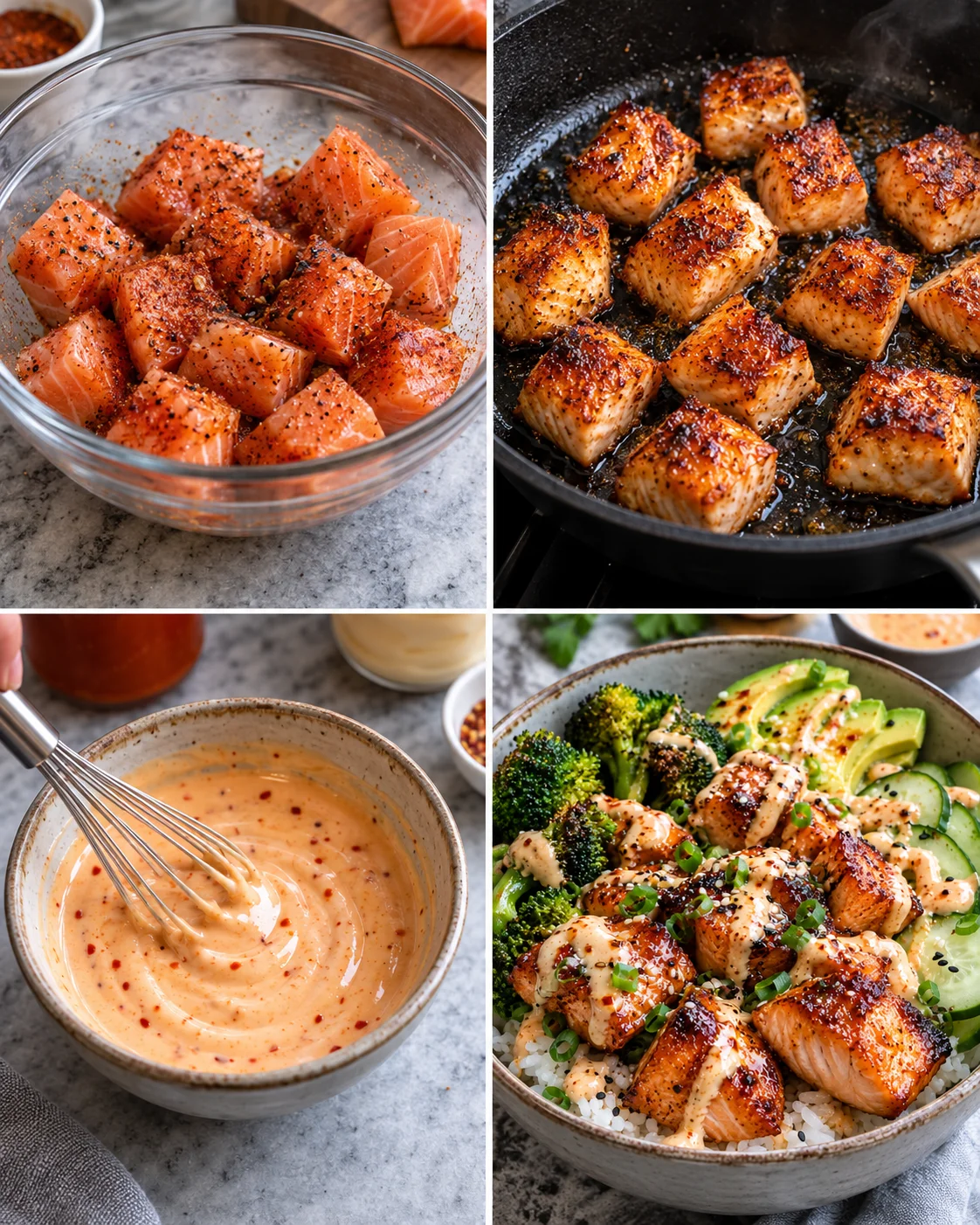
Stir the Greek yogurt or mayonnaise, sweet chili sauce, and sriracha together in a small bowl until well combined. Refrigerate the sauce until you are ready to use it. The sauce can be made up to 2 days ahead and kept in an airtight container, which is helpful when you want to shorten the final cooking session.
The finished sauce should be creamy, sweet, and gently spicy. For a milder sauce, leave out the hot sauce. If you like more heat, the sauce can also take red pepper flakes, as described in the variations below.
4. Cook the Broccoli
Steam, saute, or roast the broccoli according to your preference. For the sauteed version, cook the florets in about 1 teaspoon of avocado oil and 1/4 cup of water in a nonstick skillet. The water helps the broccoli cook while the oil contributes a little browning and flavor.
Whichever method you use, keep the broccoli ready for assembly while you finish the salmon. It brings a fresh, snappy vegetable texture to the bowl and helps balance the creamy sauce and avocado.
5. Mix the Salmon Sauce and Cut the Fish
In a small bowl, stir together the coconut aminos, rice vinegar, minced garlic, optional sriracha, and optional toasted sesame oil until the sauce is well combined. Set it aside close to the stove so it is ready to pour into the skillet at the right time.
Place the raw salmon filet on a cutting board and use a sharp knife to cut it into bite-sized cubes. If you do not like salmon skin, remove it before cutting. If you enjoy the skin, leave it on; skinless fillets are also an option. Try to keep the pieces reasonably similar in size so they cook at a similar rate.
6. Sear and Glaze the Salmon
Heat 1 tablespoon of avocado oil in a large skillet over medium-high heat. You can use another high-temperature cooking oil, but olive oil is not recommended here because it can burn easily at high temperatures. Wait a few minutes for the oil to heat until it is sizzling hot.
Carefully place the salmon chunks in the hot skillet, skin-side down when the skin is still attached. Let them cook undisturbed for 2 to 3 minutes, or until the skin is golden-brown. Leaving the pieces alone during this first sear helps them develop their crisp exterior rather than sticking or breaking apart as soon as they hit the pan.
Use tongs to carefully flip the salmon to another side and continue cooking for another 1 to 2 minutes. Then pour the prepared salmon sauce into the skillet. It should immediately boil; that is normal. If the sauce appears to evaporate too quickly at any point, reduce the heat to medium so the boil stays under control.
Continue cooking and flipping the salmon every few minutes until the pieces are fully glazed and cooked through, about 4 to 5 minutes. The exact time depends on the temperature of the salmon when it goes into the skillet and your desired level of doneness.
Salmon is fully cooked when the largest piece reaches an internal temperature of 145 degrees F. Check it with a meat thermometer inserted into the largest chunk of fish. You can also look at the center: it should be fully light pink without darker pink rawness.
7. Assemble the Bowls
Add your desired amount of rice to two large bowls. Add the cucumber salad, sauteed broccoli, and sliced avocado. Divide the cooked crispy salmon bites between the bowls, then drizzle each with bang bang sauce.
If you like a saucier bowl, drizzle on coconut aminos or teriyaki sauce as well. Chopped green onions and sesame seeds make a simple finishing touch. Serve the bowls while the salmon is hot so the fish has its best texture and flavor.
Tips for Success
- Choose the salmon carefully. Fresh salmon is recommended over frozen when possible. Wild-caught salmon, King salmon, or Atlantic salmon are recommended over sockeye salmon for the best results.
- Cut the fish into bite-sized pieces. Cubes give you more browned edges and make it easy to divide the salmon evenly between two bowls.
- Use a sharp knife. A sharp knife makes it easier to cut the raw filet cleanly without crushing the fish.
- Let the oil get hot. The skillet should be sizzling before the salmon goes in. The first 2 to 3 minutes are when the salmon develops its golden-brown exterior.
- Do not rush the first sear. Cook the salmon undisturbed until the skin is golden-brown, then use tongs to turn it carefully.
- Control the sauce boil. An immediate boil is expected when the sauce hits the skillet. If it evaporates too quickly, lower the heat to medium.
- Check the thickest piece. Cooking times vary with the starting temperature of the fish and the preferred doneness. Use the largest salmon chunk for the thermometer check.
- Keep the bang bang sauce chilled until serving. Making it ahead is one of the easiest ways to break the recipe into manageable parts.
- Serve fresh for the best texture. The salmon is at its best hot from the frying pan. If you already know you enjoy leftover salmon, you can plan for it; otherwise, make only the amount you expect to eat.
Variations and Substitutions
Coconut Aminos Alternative
You can replace the coconut aminos with 1/4 cup of liquid aminos or 1/4 cup of low-sodium soy sauce plus 1 tablespoon of pure maple syrup or brown sugar. If you use soy sauce, choose low-sodium soy sauce so the salmon does not turn out too salty. The sauce method stays the same: stir the replacement into the rice vinegar, garlic, sriracha, and sesame oil before adding it to the skillet.
Adjust the Heat
For a milder bang bang sauce, omit the sriracha from the creamy sauce. You can also add red pepper flakes to either the bang bang sauce or the salmon sauce when you want a different kind of spicy flavor. If you prefer to skip sweet chili sauce in the creamy bang bang sauce, omit it and use 2 tablespoons of pure maple syrup or honey with 1 to 2 tablespoons of sriracha.
The salmon sauce has optional sriracha and toasted sesame oil, so those ingredients can be left out when you want a simpler, less spicy finish. Fresh garlic can be swapped for garlic powder in the salmon sauce.
Change the Bowl Base or Toppings
Use cauliflower rice for a low-carb bowl. For the vegetable and topping layer, add edamame, kimchi, pickled vegetables, mango salsa, or another fruit salsa. You can also make the bowls with prepared sauces when you need to save time. These options let you use the salmon method while adapting the bowl to what is already in your refrigerator.
Use an Air Fryer
To make the salmon bites in an air fryer, marinate the cubed uncooked salmon for 1 hour in the salmon sauce ingredients, including the coconut aminos, garlic, rice vinegar, and any optional ingredients you are using. Spray the air fryer basket with cooking spray, then arrange the marinated salmon in a single layer.
Air fry at 400 degrees F for 8 to 12 minutes, or until the salmon is cooked through and the top is golden-brown. Cook time varies depending on whether the salmon is at room temperature or chilled and fresh from the refrigerator. For another detailed air-fryer method, see the Sesame Garlic Air Fryer Salmon Bites recipe.
Bake the Salmon
For a baked version, chop the salmon into cubes and marinate it in the coconut aminos mixture for at least 1 hour. Preheat the oven to 400 degrees F and line a baking sheet with parchment paper or aluminum foil. Transfer the marinated salmon bites to the baking sheet and bake for 8 to 12 minutes.
You can also bake the salmon as a full filet for 12 to 15 minutes, or until it is cooked through. Broiling the salmon can create a crispier texture. Whichever shape you choose, insert a meat thermometer into the thickest part of the filet to check that it reaches the proper internal temperature.
Storage, Make-Ahead, and Leftovers
The rice can be steamed ahead of time either the same day you prepare the recipe or up to 5 days ahead of time. The bang bang sauce can be made up to 2 days ahead and stored in an airtight container. Preparing those two components in advance leaves the salmon and vegetables to finish closer to serving time.
Store leftovers in separate airtight containers in the refrigerator for up to 5 days. Keeping the salmon, rice, cucumber salad, broccoli, avocado, and sauces separate helps you assemble portions as needed instead of storing one fully dressed bowl.
These bowls are best eaten fresh because the salmon has its best texture and flavor when it is hot from the frying pan. For that reason, batch-cooking the entire recipe is not recommended unless you already know you are a fan of leftover salmon. Making the rice and bang bang sauce ahead is the more useful meal-prep approach, while the salmon is best cooked for the meal you plan to eat.
Serving Suggestions
Build each bowl with the amount of rice you want, then add cucumber salad, broccoli, avocado, and salmon. The cucumber salad adds a bright pickled contrast, the broccoli gives the bowl a fresh vegetable bite, and avocado softens the sharper flavors with creamy texture.
Bang bang sauce is the essential finishing drizzle, but you can add coconut aminos or teriyaki sauce if you like your bowls especially saucy. Chopped green onions and sesame seeds bring color and a little extra texture. Edamame, kimchi, pickled vegetables, and mango or other fruit salsa are also good topping options from the original bowl approach.
This recipe makes enough salmon for 2 to 3 people, while the listed bowl assembly is written for two large bowls. If you are serving more people, double the salmon portion by using multiple salmon filets or one large salmon filet. Adjust the amount of rice and other bowl components to match the number of servings.
Frequently Asked Questions
What is bang bang sauce?
Bang bang sauce is a creamy sauce made here with plain Greek yogurt or mayonnaise, sweet chili sauce, and sriracha. It is sweet with a gentle kick and adds richness, texture, and flavor to the salmon rice bowl. It is also used with dishes such as bang bang shrimp and bang bang chicken.
How is bang bang sauce different from yum yum sauce?
Bang bang sauce is sweeter, while yum yum sauce is more savory. The Thai sweet chili sauce in bang bang sauce creates its sweeter flavor. Yum yum sauce uses a tomato base, which makes it tangier and more savory.
Can I leave the salmon skin on?
Yes. Leave the skin on if you enjoy it, and start the salmon skin-side down in the hot skillet. You can remove the skin if you prefer, or purchase skinless salmon fillets. The recipe works with either choice.
How do I know when the salmon is done?
The most reliable check is an internal temperature of 145 degrees F in the largest chunk of salmon. Insert a meat thermometer into that piece. The center should also be fully light pink without darker pink rawness. Because the starting temperature of the fish and desired doneness affect cooking time, the 4-to-5-minute skillet finish is an approximate guide rather than a replacement for checking the fish.
Can I make this salmon rice bowl in the air fryer?
Yes. Marinate the cubed salmon for 1 hour, place it in a sprayed air fryer basket in a single layer, and air fry at 400 degrees F for 8 to 12 minutes. The top should be golden-brown and the fish cooked through. Expect the timing to vary if the salmon is room temperature instead of chilled from the refrigerator.
Can I bake the salmon instead?
Yes. Marinate salmon cubes for at least 1 hour, then bake them on a parchment- or foil-lined baking sheet at 400 degrees F for 8 to 12 minutes. A full salmon filet can be baked for 12 to 15 minutes, or until cooked through. Broil it if you want a crispier texture, and use a thermometer in the thickest part to check the temperature.
Can I prepare this recipe for meal prep?
Prepare the rice the same day or up to 5 days ahead, and make the bang bang sauce up to 2 days ahead in an airtight container. Store leftovers in separate airtight containers in the refrigerator for up to 5 days. The salmon is best fresh and hot, so complete batch cooking is best reserved for people who already enjoy leftover salmon.
Nutrition
The listed nutrition is for 1 serving of 2 and is automatically calculated, so it should be used only as an approximation. Each serving contains 976 calories, 88g carbohydrates, 61g protein, 41g fat, 9g saturated fat, 3g polyunsaturated fat, 12g monounsaturated fat, 121mg cholesterol, 1881mg sodium, 1236mg potassium, 13g fiber, and 18g sugar.
More Bowl Food Recipes
- Thai Chicken and Cabbage Bowls
- Ground Turkey Egg Roll Bowls
- Salmon Power Bowls with Blueberry Salsa
- 10-Minute Salmon and Rice Bowl
- Chicken Burrito Bowls
- Crock Pot Shredded Chile Verde Chicken Burrito Bowls
Crispy salmon, creamy sauce, bright cucumber, and warm rice make this a satisfying bowl to return to whenever you want a flavorful seafood dinner.