Easy Mussels Recipe Garlic Butter Style with White Wine

This easy mussels recipe garlic butter fans will appreciate starts with live mussels steamed in a fragrant broth of butter, olive oil, shallots, fresh garlic, lemon, dry white wine, chicken stock, and a little cream. The shells open in about three minutes once they hit the covered pot, so the cooking feels special without becoming complicated. You get tender mussels and plenty of rich, bright broth for dipping.
Serve the mussels as an appetizer or make them the main course. They fit a date-night dinner, a gathering, or an evening when you want something that feels fancy but is still affordable and straightforward. Put a crusty sourdough loaf or baguette beside the bowls so you can scoop up the lemony white wine sauce, and pour a dry white wine such as pinot grigio or sauvignon blanc alongside.
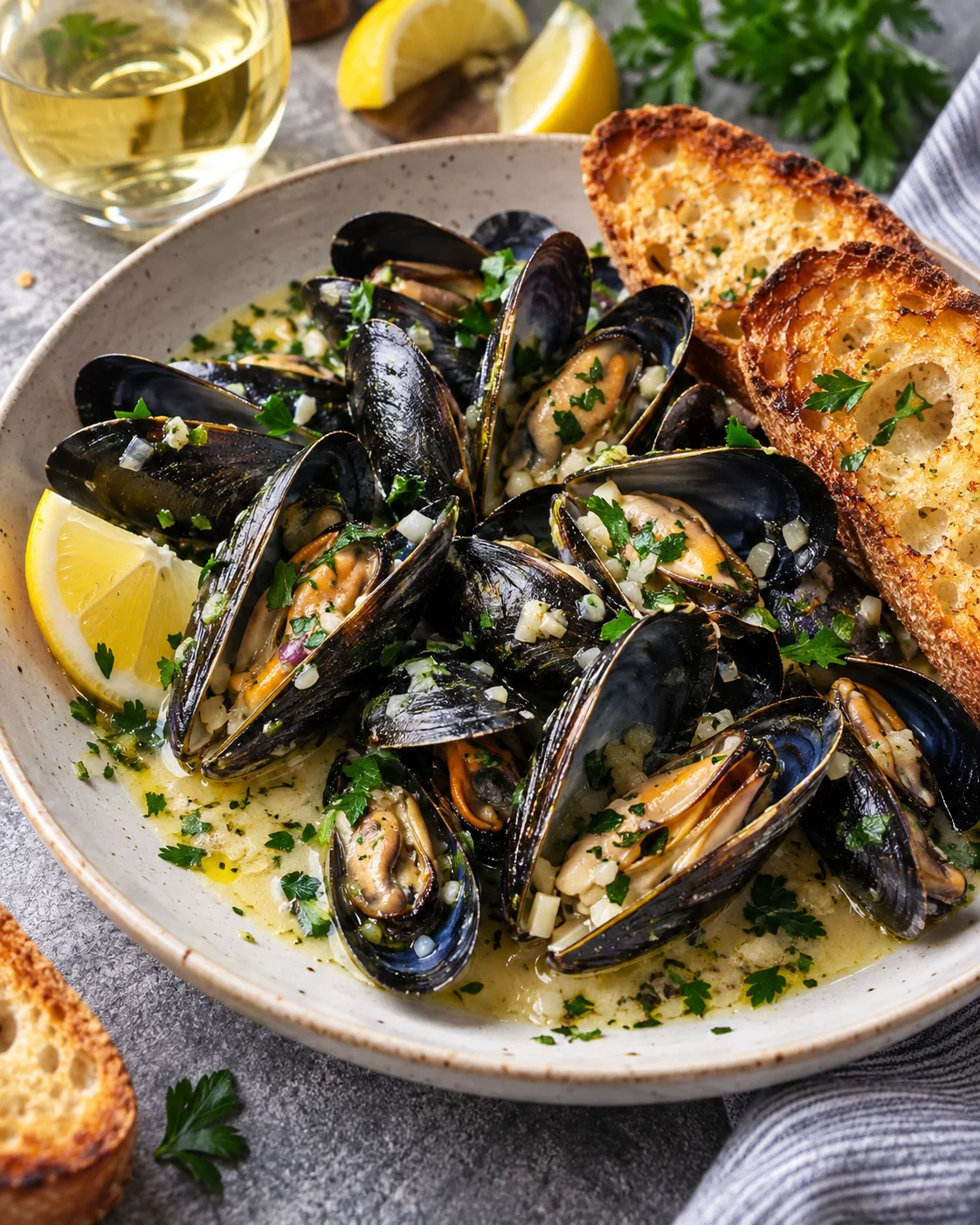
Why You Will Love This Easy Mussels Recipe Garlic Butter Style
The broth builds flavor in a sensible order. Butter and extra-virgin olive oil give the base richness, while four large shallots soften and begin to caramelize over medium heat. Fresh garlic, crushed red pepper flakes, lemon zest, and lemon juice add savory depth, gentle warmth, and brightness before the mussels go into the pot. Dry white wine and chicken stock create the liquid for steaming, and a small amount of heavy cream makes the finished broth creamy without making it feel heavy.
The result is a plate of succulent steamed mussels surrounded by a sauce that is both rich and lively. Lemon zest and lemon juice go into the broth, and fresh parsley brings a clean herbal finish. Red pepper flakes add a little warmth, but the dish is not meant to be especially spicy as written; they can be left out if you are firmly against spice.
This recipe makes 6 servings and can be served as an appetizer or a full seafood meal. You can choose black mussels, green-lipped mussels, blue mussels, or another available variety. North America is home to almost 300 species of mussels, so the selection at your seafood counter may vary.
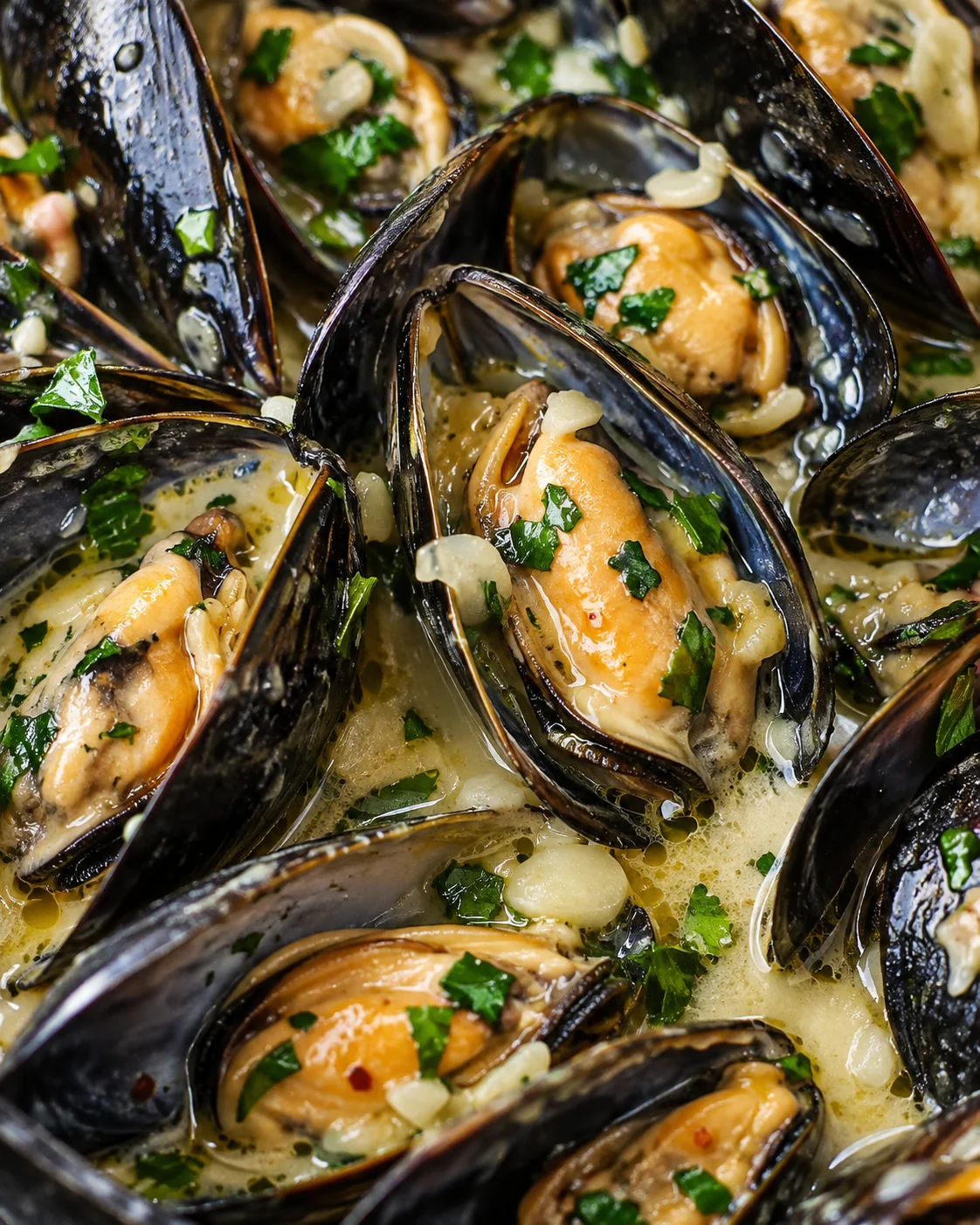
Ingredients
For the garlic-butter white wine broth
- 4 tablespoons (57 g) unsalted butter, cut into 1/2-inch pieces: Unsalted butter is best because it lets you control the seasoning. Salted butter will work, but eliminate the salt called for in the recipe until you have tasted the broth.
- 1 1/2 tablespoons (21 ml) olive oil: Extra-virgin olive oil is the preferred choice here. Do not substitute canola oil or vegetable oil.
- 4 large shallots, finely chopped: Shallots are the first major flavor layer in the broth. White onion can be used in their place.
- 8 cloves fresh garlic, thinly sliced: Use the best fresh garlic available. Garlic powder is not an option for this recipe because the fresh slices provide the intended flavor.
- 1/2 teaspoon crushed red pepper flakes: This adds gentle warmth. Omit it if you prefer no spice.
- 1 teaspoon finely grated lemon zest and 2 tablespoons (28 ml) freshly squeezed lemon juice: You will use both the zest and the juice. Choose a plump lemon with firm skin. Having an extra lemon or two gives you wedges for garnish and additional juice if needed.
- 1 cup (227 ml) dry white wine: Sauvignon Blanc or Pinot Grigio are suggested choices for the broth.
- 3/4 cup (170 ml) chicken stock: This adds depth and richness. Chicken bone broth can provide an even deeper, more intensified flavor.
- 1/3 cup (76 ml) heavy cream, also called whipping cream: Cream rounds out the sauce and makes it rich without turning it overly heavy.
- 1/2 teaspoon salt, plus more to taste if needed, and 1/4 teaspoon black pepper: Start with the smaller amount of salt, especially if you use salted butter or a well-seasoned stock, then adjust after tasting.
- 1/4 cup fresh parsley, chopped, plus more for garnish: Fresh parsley is stirred into the broth at the end. Do not substitute dried parsley flakes.
For the mussels and serving
- 1/4 cup all-purpose flour: Use it in the cold-water cleaning soak.
- 4 1/2 pounds live mussels, cleaned and beards removed: Scrub the shells and remove the beards before cooking. Make sure the mussels are alive when you buy them. If Prince Edward Island mussels are available, they are a suggested choice.
- Lemon wedges for serving: These add a fresh squeeze at the table and make the finished bowls look bright.
- Crusty bread for serving: A crusty sourdough loaf or baguette is ideal for sopping up the white wine and garlic sauce.
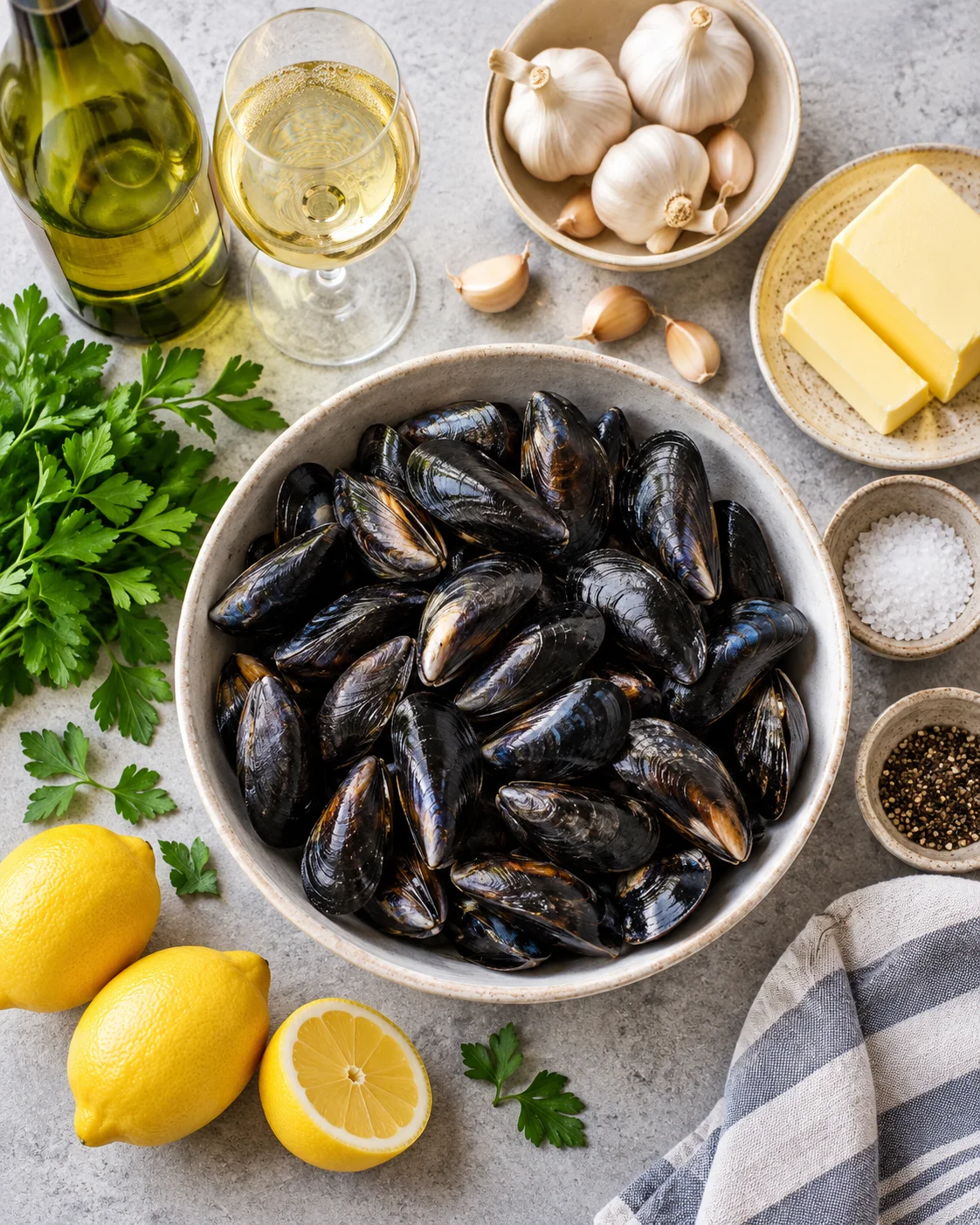
How to Clean Mussels Before Cooking
Fresh mussels need to be cleaned before they go into the broth. Shells can carry sand and grit, and the mussels also need to be debearded. Set up this step before cooking so the cleaned shellfish is ready when the shallot and garlic base is finished.
- Fill a large bowl with cold water. Choose a bowl with enough capacity for all the shellfish plus plenty of water.
- Add the mussels, then mix in 1/4 cup all-purpose flour.
- Using your hands, give the mussels a good swoosh in the water for a few minutes. Set the bowl aside for 30 minutes.
- After 30 minutes, drain the shellfish. Remove the beard from each mussel using your fingers.
- If a shell still looks dirty, scrub it with a small culinary brush under running water until it is clean. Toss any mussel that looks questionable. Seafood is not a place to take a risk.
- If any shells are open, discard them before cooking. Add only mussels with firmly shut shells to the pot.
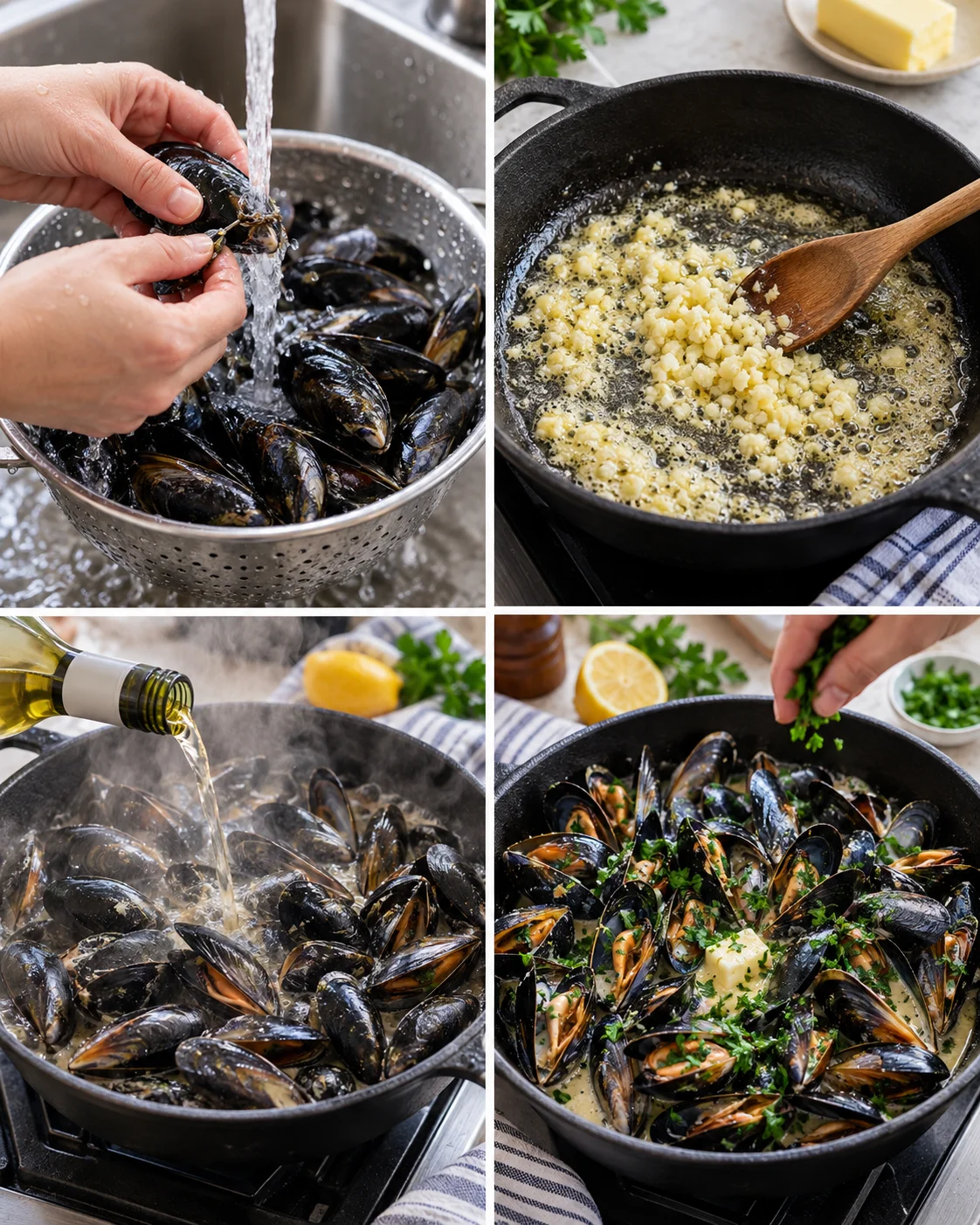
How to Make Easy Mussels Recipe Garlic Butter Style
- Choose a roomy pot. Use a pot large enough to hold all 4 1/2 pounds of mussels and the white wine broth, with extra space at the top. That headroom helps keep the liquid from boiling out on the stovetop as the mussels steam.
- Start the butter and oil. Heat the butter and olive oil over medium heat in the large pot. Wait until the butter is completely melted before adding the aromatics.
- Soften the shallots. Add the finely chopped shallots and cook for 8 to 10 minutes, stirring occasionally. They should become slightly softened and just begin to caramelize. Medium heat gives them time to develop flavor without burning.
- Cook the garlic and pepper flakes. Add the thinly sliced garlic and cook for 1 minute. Add the crushed red pepper flakes and cook for 1 more minute.
- Add the lemon. Stir in the grated lemon zest and freshly squeezed lemon juice until well combined. The citrus goes into the aromatic base before the mussels and cooking liquids.
- Add the mussels and steaming liquids. Add the cleaned mussels, dry white wine, and chicken stock. Stir well to coat the mussels in the broth, then increase the heat to medium-high and place a fitted lid on the pot.
- Steam until the shells open. Cook, checking often, until the mussel shells have opened, about 3 minutes. Discard any mussels that do not open.
- Finish with cream. Reduce the heat to low. Slowly pour in the heavy cream while mixing constantly.
- Season and serve. Stir in the salt, black pepper, and chopped fresh parsley. Taste and add more salt if needed. Remove the pot from the heat and divide the mussels and broth among bowls. Serve with lemon wedges, crusty bread, and a good white wine.
Tips for Success
Clean every shell thoroughly
Clean fresh mussels before cooking to address sand and grit. Soak them in cold water with flour, drain them after 30 minutes, remove the beard, and brush any dirty shells under running water. Keep only firmly shut mussels for cooking.
Buy live mussels from a seafood counter you trust
Ask the person selling the seafood how long the shellfish has been sitting in the seafood case. The mussels should look and smell fresh when you buy them. Do not purchase shellfish that looks questionable, and do not try to rescue a mussel that raises concerns during cleaning.
Prepare the steaming stage for a quick finish
Once the mussels are in the pot, increase the heat to medium-high and cover with a fitted lid. Check often because the shells can open in about 3 minutes. Serve the mussels that open and discard those that do not.
Season carefully at the end
Start with the listed 1/2 teaspoon salt, then taste after the cream and parsley have been stirred in. Salted butter will change how much seasoning the broth needs, so leave out the called-for salt initially if that is the butter you use.
Variations and Substitutions
- Use salted butter carefully: Unsalted butter is preferred, but salted butter works. Leave out the recipe’s salt until you have tasted the broth, then add more only if needed.
- Swap the shallots for white onion: White onion is the supported alternative when shallots are not available. Keep the same careful medium-heat cooking approach so the onion softens before the garlic is added.
- Choose your mussel variety: Black mussels, green-lipped mussels, blue mussels, and other varieties can be used according to what is available. If you find mussels from Prince Edward Island, they are a suggested option.
- Skip the red pepper flakes: Omit them if you are absolutely against spice. The dish will still have its garlic, lemon, wine, herb, and buttery flavors, and the flakes are not intended to make it especially spicy.
- Use chicken bone broth: Chicken stock is the listed liquid, while chicken bone broth is an option for a deeper and more intensified flavor.
- Pick a dry wine: Sauvignon Blanc and Pinot Grigio are suggested for the broth and for serving. Avoid treating the wine as an afterthought because it is part of the sauce’s flavor.
Some ingredients are central to the character of the dish rather than easy swaps. Use fresh garlic instead of garlic powder, fresh parsley instead of dried parsley flakes, and extra-virgin olive oil rather than canola or vegetable oil. The fresh lemon zest and juice are also used together, so choose a lemon with firm skin and enough juice for both the pot and the table.
Storage, Make-Ahead, and Freezing
The storage guidance for this recipe is for live mussels before cooking. Freshwater mussels can be purchased a day or two before cooking, but do not store mussel species for more than 2 days. Before using them, make sure they still look and smell fresh.
- Remove the seafood from the bag it came in.
- Drain excess liquid, then transfer the mussels to a large, unsealed container or bowl.
- Cover them with a clean damp cloth or several layers of damp paper towels. The covering should be damp, not soaking wet, because excess moisture is not wanted.
- Place the bowl in the refrigerator and store the mussels for up to 2 days.
- Do not let the mussels sit in water. Check them daily and drain away water as needed.
Serving Suggestions
Use wide, shallow bowls for serving. They leave room for the mussels, generous spoonfuls of the white wine broth, lemon wedges, and a piece of crusty bread. Set extra serving bowls on the table for empty shells so everyone has a convenient place to put them as they eat.
Serve the mussels as an appetizer when you want a shared first course, or make them a full meal with the bread on the side. A crusty sourdough loaf or baguette is especially useful here because it can soak up the garlic, lemon, wine, stock, and cream broth. Lemon wedges provide a fresh finishing touch, and a dry white wine such as Pinot Grigio or Sauvignon Blanc suits the meal.
Mussels suit date-night dinners and evenings with company because they feel fancy and easy. They are also affordable compared with many other seafood choices, which is a practical bonus.
Frequently Asked Questions
Do I have to clean fresh mussels myself?
Yes, clean fresh mussels before cooking so you can remove sand, grit, and the beard. Soak them in cold water mixed with 1/4 cup all-purpose flour for a few minutes of swooshing, then leave the bowl for 30 minutes. Drain, debeard, and brush any shells that still look dirty under running water.
What should I do with an open mussel?
Discard any shell that is open before cooking, and add only firmly shut mussels to the pot. After steaming, discard any mussel that does not open. This recipe specifically calls for both checks rather than treating every shell as usable.
Can I use salted butter?
Yes, but unsalted butter is best for controlling the broth’s seasoning. If you use salted butter, eliminate the listed salt until after you taste the finished broth. Add more only if it needs it.
Which white wine is best for mussels?
Use a dry white wine. Sauvignon Blanc and Pinot Grigio are the suggested choices for the broth, and either can also be served with the mussels. The wine joins the butter, lemon, and chicken stock to make the steaming broth.
Can I omit the crushed red pepper flakes?
Yes. Omit them if you are absolutely against spice. The flakes are not intended to make the dish spicy.
Which mussels can I use?
Black mussels, green-lipped mussels, blue mussels, and other available varieties can be used. Make sure the mussels are alive when you buy them; Prince Edward Island mussels are also a suggested choice.
How long can I store live mussels?
Store live mussels in the refrigerator for up to 2 days. Remove them from their bag, drain excess liquid, place them in a large unsealed container, and cover them with a clean damp cloth or damp paper towels. Do not leave them sitting in water; check daily and drain water as needed.